Land Fire Surge 2025: Hot Weather Narrative Masks Government and Corporate Accountability
By Admin
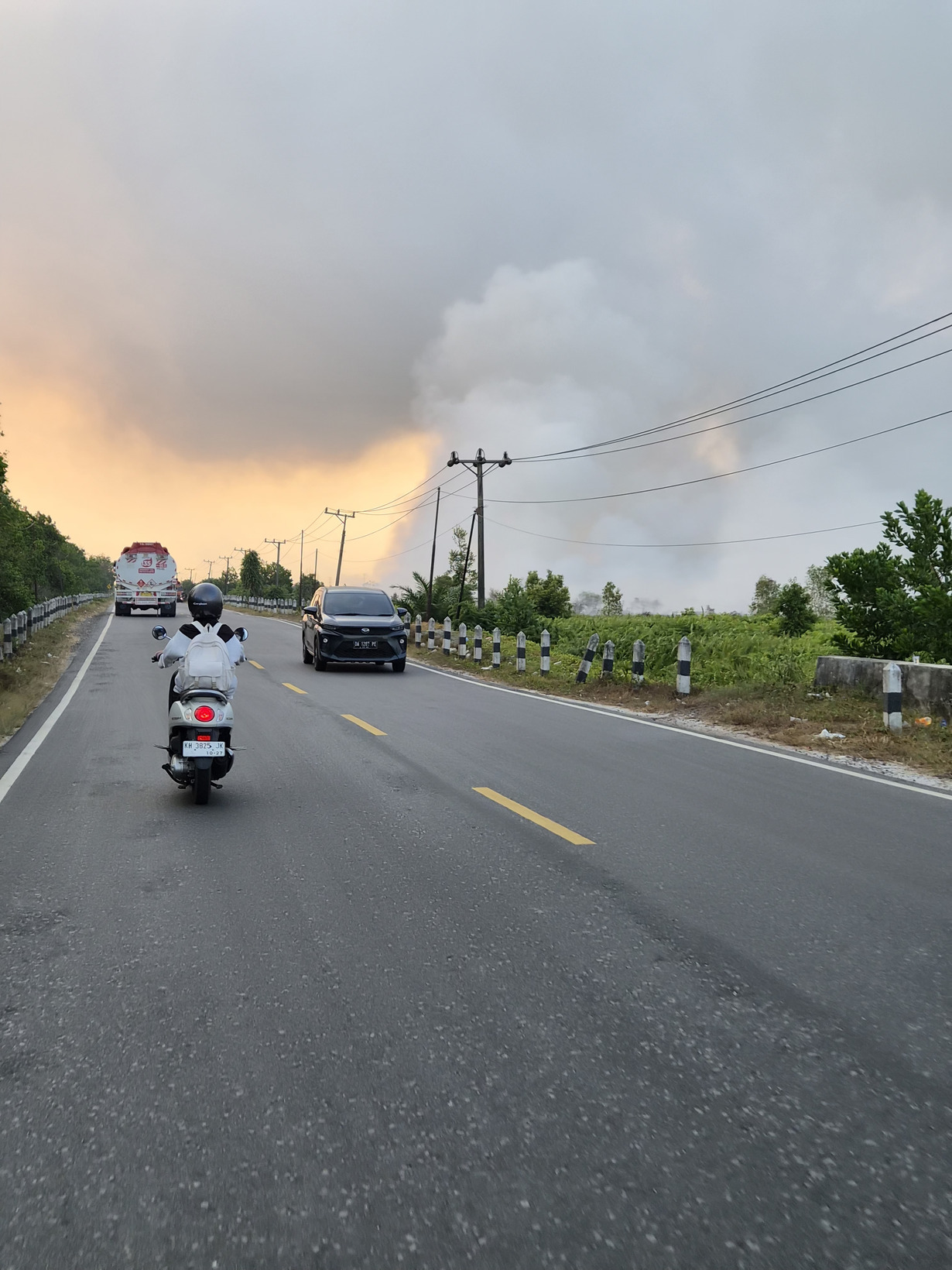
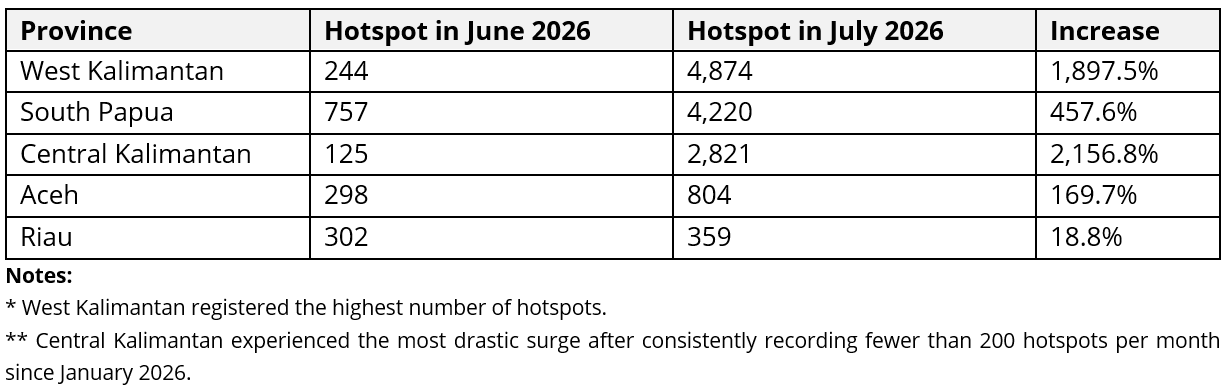
Pantau Gambut recorded 15,067 hotspots in July 2026, representing a 549 percent increase compared to June. Stakeholders must address this elevation urgently because it indicates a growing threat of forest and land fires in peatland ecosystems.
We highlighted five provinces that experienced a striking surge in hotspots during July 2026:
A strong El Niño intensifies this threat. The Indonesian Agency for Meteorology, Climatology, and Geophysics (BMKG) predicts the phenomenon will persist at least until early Q1 2027, while the dry season typically peaks in August and September 2026. Under these conditions, the Indonesian government must prioritize 24.2 million hectares of Peatland Hydrological Unit (PHU) across the country through preventive policies that preserve peatland hydrological functions. Without such measures, the risk of repeating the severe 2015 fire crisis will only escalate.
These findings expose a stark gap between claims of developmental progress and the reality of public safety. Instead of enjoying the fruits of independence, communities surrounding PHUs continue to face recurring ecological crises.
A 549 percent surge in hotspots within a single month serves as a stark warning that a reactive approach is no longer sustainable. The government must stop waiting for fires to spread and allowing communities to bear the consequences of delayed prevention," said Iola Abas, Executive Director of Pantau Gambut.
According to Iola, development must not occur at the expense of peatland ecological functions and public safety. Authorities must stop treating peatlands as vacant spaces to drain and divert for short-term interests.
The government must immediately follow up on this hotspot increase by investigating the locations and drivers that leave peatland areas perpetually vulnerable to fires, including land cover conditions, water management, and activities within concessions and development project sites. These findings must form the foundation for government action to strengthen prevention and ensure restoration in damaged areas.
"Liberating peatlands means ensuring that communities no longer bear the cost of development decisions that ignore ecological risks. True independence cannot exist as long as haze from forest and land fires strips citizens of their right to breathe freely," Iola concluded.
Page thumbnail ©Threads/ariesmaulanar