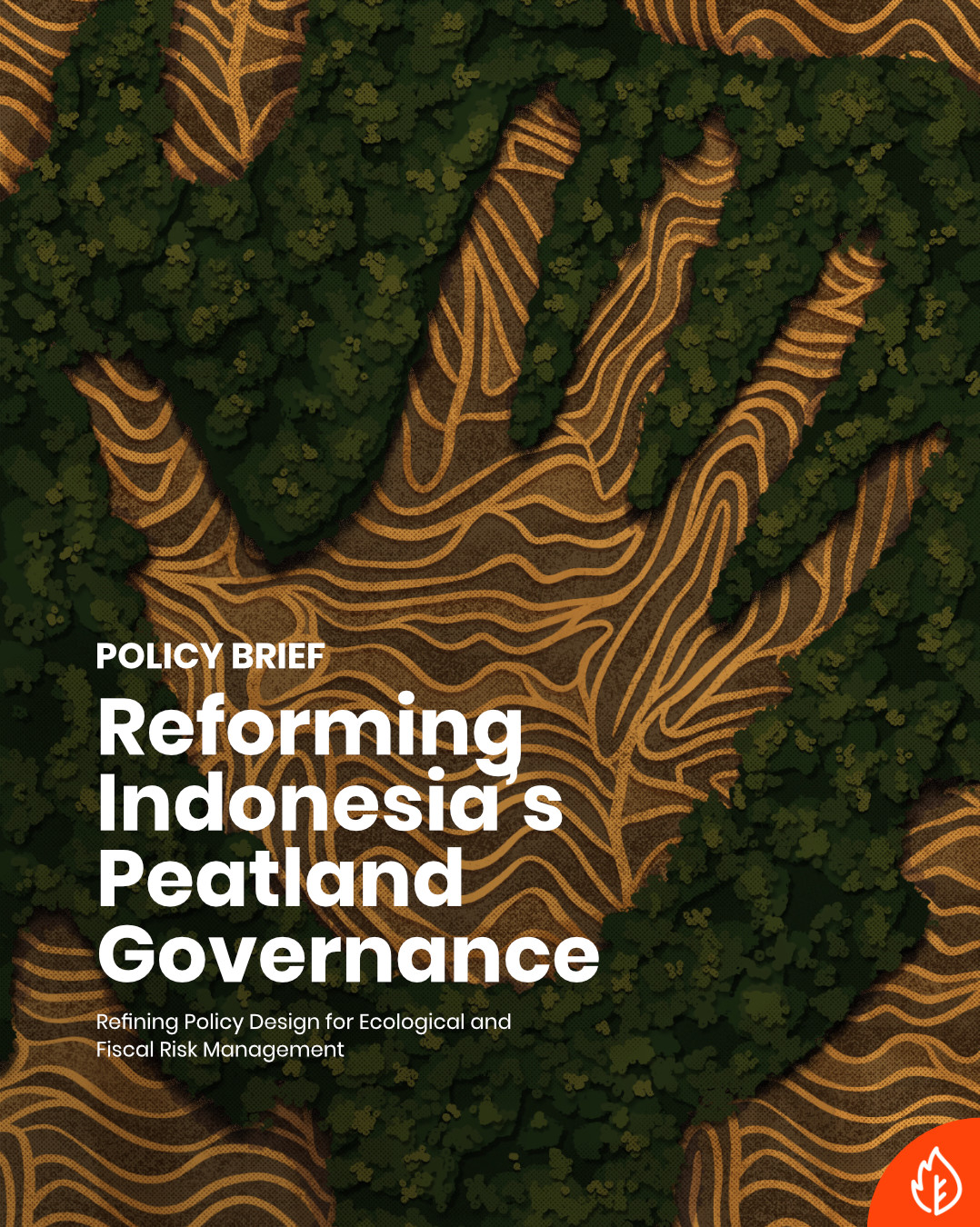
Pantau Gambut published a policy brief entitled "Peatland Governance Reform: Improving Policy Design for Ecological and Fiscal Risk Management" on 4 March 2026. The document highlights a number of structural issues in Indonesia's peatland governance that pose risks to both ecological sustainability and national fiscal stability of the state.
The policy brief identifies three major issues that continue to constrain the effectiveness of peatland protection:
- Fragmented licensing authority dispersed across multiple ministries without an integrated verification mechanism grounded in Peat Hydrological Units (PHU).
- Potential inconsistencies in environmental protection standards resulting from licensing simplification under the National Strategic Projects (NSP) scheme through Government Regulation No. 28/2025.
- The absence of an equivalent national coordination mechanism following the end of the mandate of Badan Restorasi Gambut dan Mangrove (BRGM).
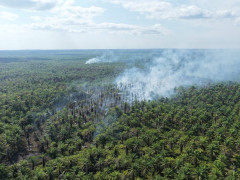
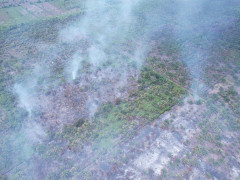
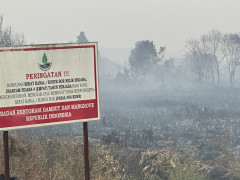
Beyond generating fiscal risks, weak governance has also produced significant social and environmental impacts. The cost of handling forest and land fires in 2025 reached IDR 6.7 trillion, while more than 1,200 people lost their lives as a result of floods in Sumatra in early 2026. At the same time, approximately 16 million hectares of Peat Hydrological Units (PHU) remain vulnerable to fire and flooding.
These conditions demonstrate that peatland governance is no longer solely an environmental issue, issue, but it directly affects the consistency of Indonesia’s broader development agenda, including the targets of the National Medium-Term Development Plan (RPJMN) and the achievement of the FOLU Net Sink 2030 target.
To address these challenges, Pantau Gambut has formulated phased policy recommendations. In the short term, the document advocates for a review of Article 232 of Government Regulation No. 28 of 2025 and the strengthening of PHU-based restoration obligation implementation. In the medium term, recommendations are focused on the harmonisation of spatial planning and licensing, as well as the revision of Government Regulation No. 57 of 2016. Over the long term, the policy brief calls for the drafting of an integrated, PHU-based Peatland Ecosystem Protection Law.
Download and read the full policy brief via the link below.