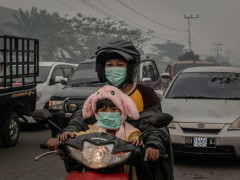
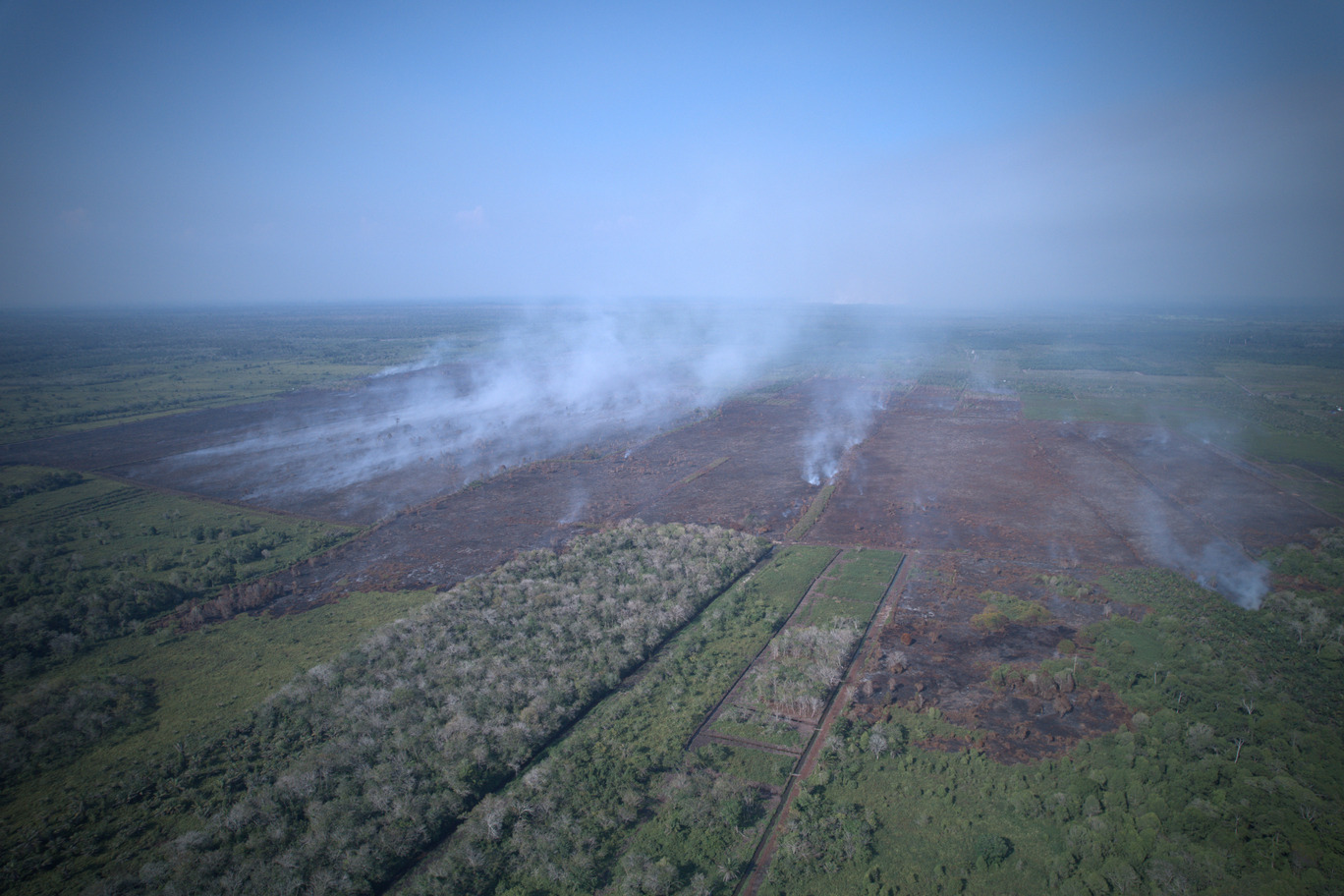
Protected ecosystems should be safeguarded and designated solely for research and conservation activities. ires occurring within these deep peat areas carry the potential to cause permanent ecological damage, affecting economic stability and the quality of life of communities exposed to haze pollution. These findings indicate that peatland fires are no longer seasonal in nature, but have evolved into a recurring structural crisis.
Pantau Gambut Campaign Officer, Putra Saptian stressed, “The series of ecological disasters resulting from degraded peat ecosystems must be understood as a unified ecological warning. Peatland restoration can no longer be treated as a procedural formality or postponed in the name of short-term economic interests.”
Aceh and West Kalimantan were the most severely affected provinces, recording 1,444 and 2,216 hotspots respectively. At the national level, Pantau Gambut identified 1,824 hotspots within concession areas, including 1,617 hotspots located within oil palm cultivation rights areas, particularly in West Kalimantan. These findings reinforce evidence that peat drainage through canalization and land conversion for monoculture plantations remain major drivers of recurring fires.
Pantau Gambut also highlighted the high incidence of forest and land fires across Papua Island, particularly in South Papua, which accounted for 308 out of 589 hotspots. Given the region is currently one of the focal areas of the National Strategic Project (NSP) for food development, the flare in fires in South Papua serves as a serious warning. Without a robust peatland protection framework, large-scale development projects risk accelerating degradation within peat ecosystems that have historically remained relatively intact.
These conditions are compounded by the stagnation of peatland restoration and weak state monitoring systems for peat ecosystem protection and management in Indonesia. Following the end of the mandate of Badan Restorasi Gambut dan Mangrove (BRGM) in 2024. no institution has been specifically tasked with peatland restoration. This situation has become more complex following the separation of the Ministry of Environment and Forestry (KLHK) into two distinct bodies, the Ministry of Environment and the Ministry of Forestry.
The separation of these ministries, combined with the absence of clarity regarding the institution designated as the focal point for peat ecosystem management and protection, has created growing uncertainty over the future of peatland ecosystems. This carries implications for fragmented coordination of inter-ministerial and agency institutions that is becoming increasingly sectoral. Many peat ecosystems remain located within forest areas, making multisectoral law enforcement a critical aspect of effective governance.
Although in August 2025 the Ministry of Environment/Environmental Control Agency (KLH/BPLH) established the Peatland and Mangrove Ecosystem Management Office (Balai Pengeloalan Ekosistem Gambut dan Mangrove/BPEGM), there remains no clear implementation plan regarding restoration infrastructure maintenance and the operationalization of state-owned intangible assets, including the Peatland Restoration Information and Mangrove Rehabilitation System (PRIMS) and the System for Peatland Water Monitoring and Landscape Assessment (SIPALAGA), both previously administered under BRGM.
Although authority over these intangible state assets was automatically transferred to the Ministry of Environment, particularly the Deputy for Environmental Governance and Sustainable Natural Resources, BRGM’s monitoring systems had not resumed full operation by early 2026. The absence of real-time monitoring and weak restoration efforts signal a regression in ecosystem protection against forest and land fires. Pantau Gambut warned that these risks are particularly alarming given the projected El Niño conditions expected in 2027.
Putra further added, “Future policy direction must be capable of reuniting peatland management across sectors, with a primary orientation toward environmental restoration, disaster prevention, and the protection of communities' rights to a healthy environment.”