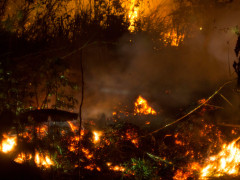
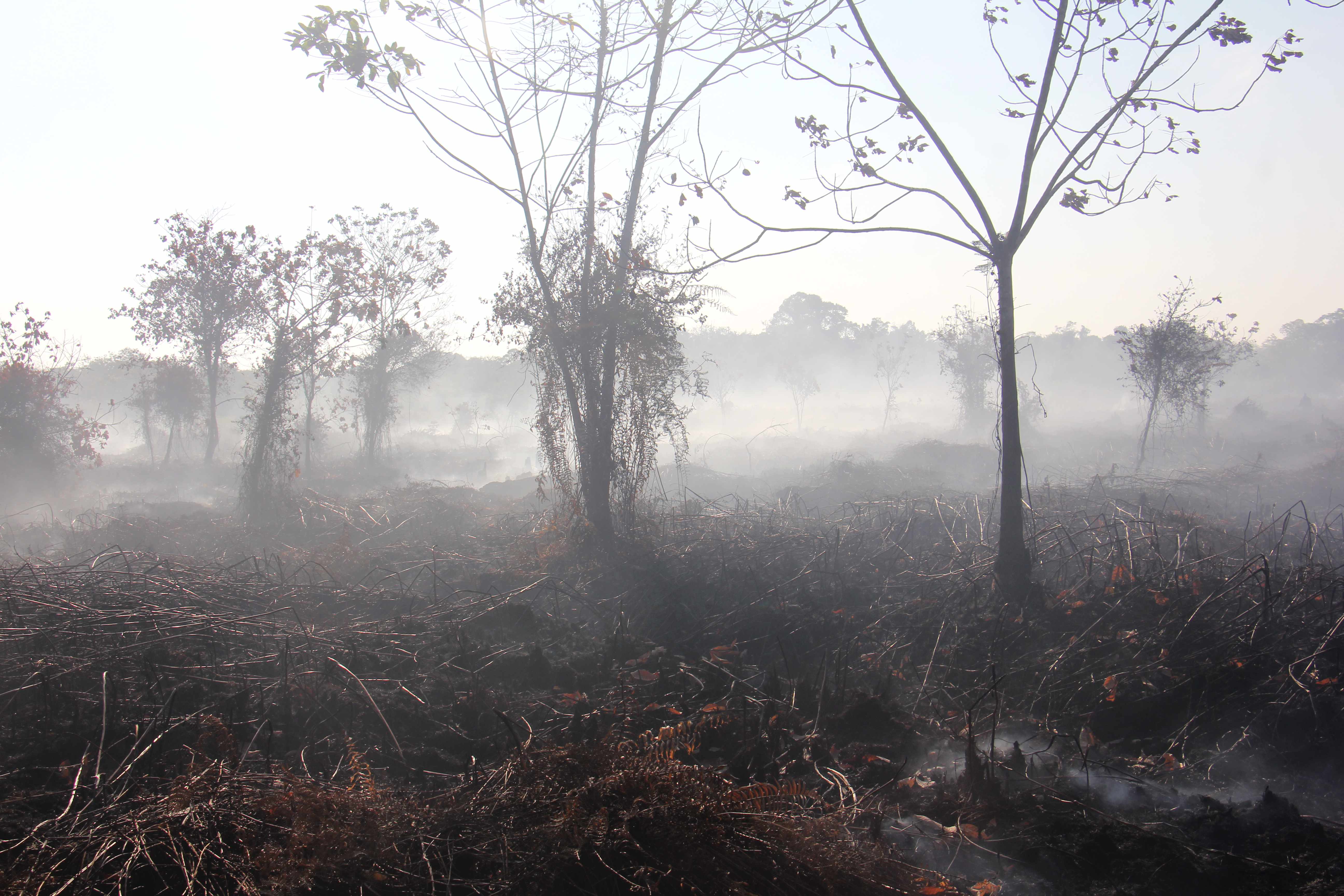
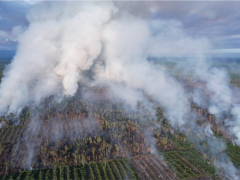
Pantau Gambut data indicate that thousands of hotspots have been detected since the beginning of the year, with the majority located within concession areas, pointing to unresolved structural issues in peatland governance.
Pantau Gambut recorded Riau Province as having the highest number of hotspots at 8,930, followed by Aceh with 1,975, Jambi with 359, and South Sumatra with 164. Of the total findings, 7,526 hotspots were located within concession areas, consisting of 6,192 hotspots in cultivation rights areas (Hak Guna Usaha/HGU) and 1,334 hotspots within forest utilization permits (PBPH/IUPHHK).
These findings suggest that peatland drainage through canal construction, alongside the expansion of monoculture plantations, remains a dominant driver of recurring fires in the region.
At the national level, throughout January to March 2026, a total of 23,546 hotspots were detected within Peat Hydrological Units (PHU). A total of 15,424 hotspots were located within Peat Ecosystem Protection Functions (Fungsi Lindung Ekosistem Gambut/FLEG), while 8,122 were identified in cultivation areas. These figures reinforce that forest and land fires are no longer seasonal in nature, but reflect structural failures in peat ecosystem protection.
Coordinator of Perkumpulan Rawang, Hairul Sobri, assessed that South Sumatra is once again on the brink of a haze crisis due to the combination of extreme El Niño threats and weak forest and land fire prevention systems. “Without serious intervention, communities in South Sumatra will continue to bear the burden of an annual haze cycle that should be preventable.”
In line with conditions in South Sumatra, Program Manager at Walhi Jambi, Aditya Prakoso, emphasized that fire management cannot be limited to firefighting efforts. “The root causes lie in land governance, peat ecosystem protection, and high-risk land clearing practices in the industrial sector,” he stated.
Executive Director of Walhi Riau, Eko Yunanda, revealed indications of approximately 100 hotspots distributed across 10 oil palm and timber companies. “Fire points have also been identified within corporate concession areas on small islands such as Rupat, Bengkalis, and Mendol,” he explained.
Meanwhile, Director of Apel Green Aceh, Rahmad Syukur, highlighted weaknesses in law enforcement. “Aceh does not lack regulation, but rather the political will to enforce it. The Rawa Tripa case demonstrates that legal instruments are in place, yet deterrence remains absent.”
Pantau Gambut assesses these conditions reflect structural failures in peatland governance, particularly driven by regulatory fragmentation that constrains effective monitoring and enforcement. Amid increasing climate risks, this situation is likely to amplify both ecological burdens and economic losses.
Campaigner at Pantau Gambut, Putra Saptian, emphasised the government must urgently undertake a comprehensive reform of the regulatory framework. “The formulation of a Peat Ecosystem Protection Bill based on Peat Hydrological Units (PHU) is a critical step to address overlapping policies that have long undermined effective protection,” he asserted.