This country has a long-standing habit: peatlands are only remembered when smoke begins to choke its cities. Each time the dry season approaches, coordination meetings are convened, emergency status declarations are issued, and the public is once again reminded of the threat of forest and land fires. Yet once the rains return and fire hotspots disappear from monitoring screens, the more fundamental issue is pushed aside from the policy agenda: peatland governance itself. Meanwhile, the threat continues to intensify.
Amid increasing global climate anomalies and the potential emergence of a “Godzilla” El Niño expected to prolong the dry season, Indonesia’s peatland landscape faces layered risks: long-degraded ecosystems intersect with governance systems that have yet to undergo structural reform.
What we are facing today is not merely a matter of extreme weather. It is the accumulated consequence of prolonged policy neglect.
There is something fundamentally flawed in the way the state currently treats peatlands. Amid an increasingly tangible climate crisis, ecosystems that should function as the last line of environmental defense are instead left without a clear and coherent governance direction. Peatlands are no longer positioned as ecological systems requiring holistic protection, but rather as production spaces that can be negotiated through policy frameworks.
This situation has not emerged in a vacuum. In recent years, peatland protection and restoration efforts have shown signs of stagnation, and in some instances, regression. The landscape-level approach based on Peat Hydrological Units (PHU), which had previously gained some traction, is now once again fragmented by sectoral policies.
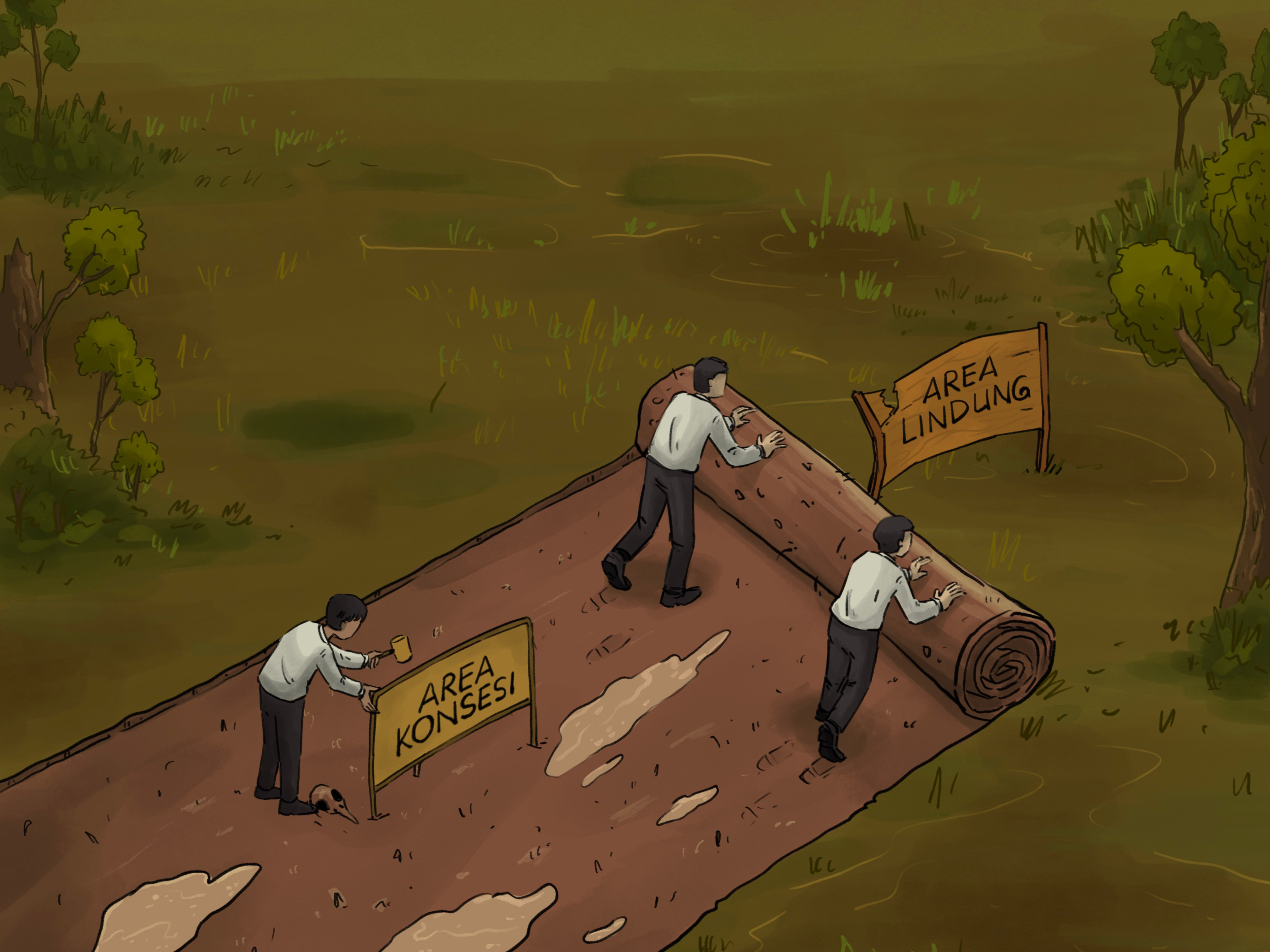
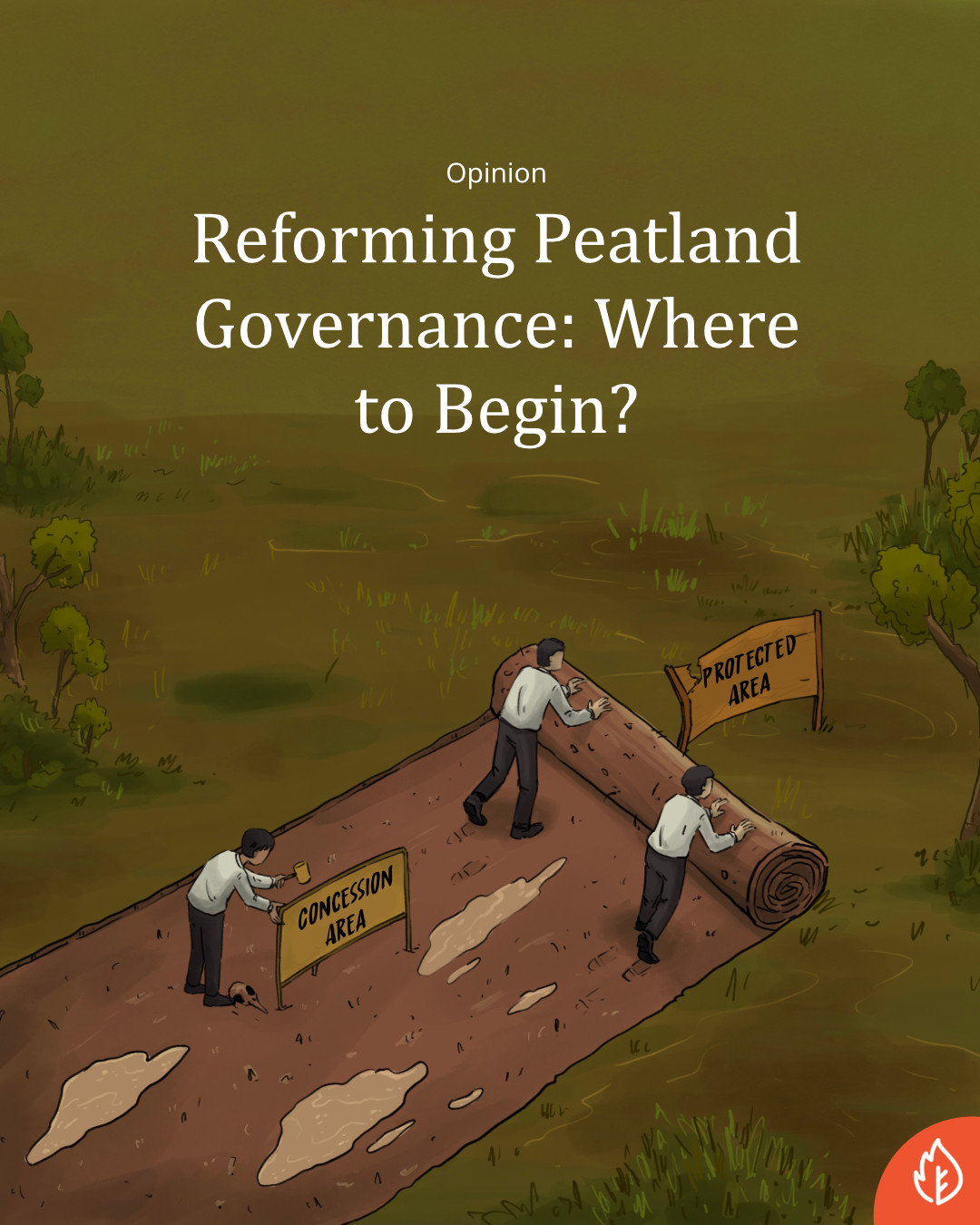
At the same time, the government is expanding the scope of intervention through National Strategic Projects (NSP), which in practice create loopholes that allow exemptions from environmental protection standards.
From an institutional perspective, following the end of the mandate of the Peatland and Mangrove Restoration Agency (BRGM), the state has not yet established an institution with equivalent authority. Efforts in restoration and inter-agency coordination have in fact shown regression compared to the previous period.
Through Government Regulation No. 28 of 2025 on Risk-Based Business Licensing, land-based business permitting mechanisms under the NSP framework have been simplified. This simplification is not without consequences.
When projects are located in peatland areas, particularly those designated as protection functions, exemptions from certain environmental standards risk creating a dualistic policy regime. On the one hand, the state acknowledges the importance of peatland protection. On the other hand, it simultaneously opens pathways for its degradation.
The impacts of this policy direction are increasingly visible on the ground. Recent data from Pantau Gambut indicate that since early 2026, a total of 23,546 hotspots have surrounded PHU across various regions in Indonesia. This is not merely a statistic on fires; it is an indicator of governance failure.
More concerningly, 15,424 hotspots are located within Peatland Ecosystem Protection Function Areas (FLEG), while the remaining 8,122 hotspots are in cultivation zones. These figures should serve as a national warning signal.
Peatland protection function areas play a crucial ecological role. These zones store large amounts of carbon, regulate hydrological balance, and serve as natural buffers against floods and droughts.
When such areas burn, what is lost is not merely land cover. What is released into the atmosphere is carbon emissions on a massive scale, while what is damaged is not only the water regulation system but also the safety and livelihoods of surrounding communities.
The issue becomes even more serious when examining the location of these hotspots. Pantau Gambut’s analysis found that 7,526 hotspots were located within concession areas, consisting of 6,192 hotspots in Oil Palm Plantation Business Rights (HGU) areas and 1,334 hotspots in Forest Utilization Business Permits (PBPH) areas.
These data expose a fundamental issue that has long been neglected. Fires in peatlands cannot continue to be explained solely as a consequence of the dry season or community activities. When thousands of hotspots emerge within licensed concession areas, the problem clearly lies in spatial planning, compliance by permit holders, weak oversight, and inadequate law enforcement.
Legality, it turns out, does not necessarily translate into environmental protection. In many cases, permits function instead as administrative shields that obscure the fragility of state oversight. It is in this context that the state is not merely negligent, but actively amplifies risk.
What is more often overlooked is that peatland governance is not solely about preventing forest and land fires. Peatlands are living systems. Across many regions in Sumatra, Kalimantan, and Papua, communities depend on the ecological functions of peatlands for their livelihoods, including water sources, swamp fisheries, rattan, forest honey, sago, coconuts, and various other forms of subsistence.
When water tables drop and land dries out, what is lost is not only vegetation. What disappears is the entire livelihood system of local communities, local food security, and ultimately the very living space of these communities. Allowing peatlands to degrade therefore means allowing the collapse of the foundations of community life. Amid increasing climate anomalies such as El Niño, maintaining fragmented policy approaches is tantamount to allowing disasters to occur systematically and repeatedly.
The state should act to close risk gaps, not widen them through contradictory policies. For this reason, corrective action can no longer be postponed.
In the short term, the government has no choice but to review the provisions related to SNP under PP No. 28 of 2025, particularly articles that potentially allow exemptions from peatland protection standards.
All activities in peatland areas must be subject to consistent environmental protection standards. In addition, the implementation of PHU-based restoration must be substantially strengthened through rewetting, canal blocking, vegetation rehabilitation, and cross-landscape monitoring.
In the medium term, harmonization of spatial planning and permitting based on PHUs is urgently required. Without a hydrological landscape-based approach, all restoration efforts will remain partial and will fail to address the root of the problem.
Ultimately, however, all these recommendations depend on one fundamental factor: political will. Without the courage to reform policies, strengthen oversight, and evaluate permits in peatland areas, including NSP projects, the entire protection agenda will remain rhetorical.
If this condition continues to be left unaddressed, we are not merely facing a natural disaster. We are actively designing one. And every hotspot in peatlands is a marker of political decisions that chose inaction.