

| Stories
The Challenges of Pematang Rahim Peat Ecotourism Development
By Yitno Suprapto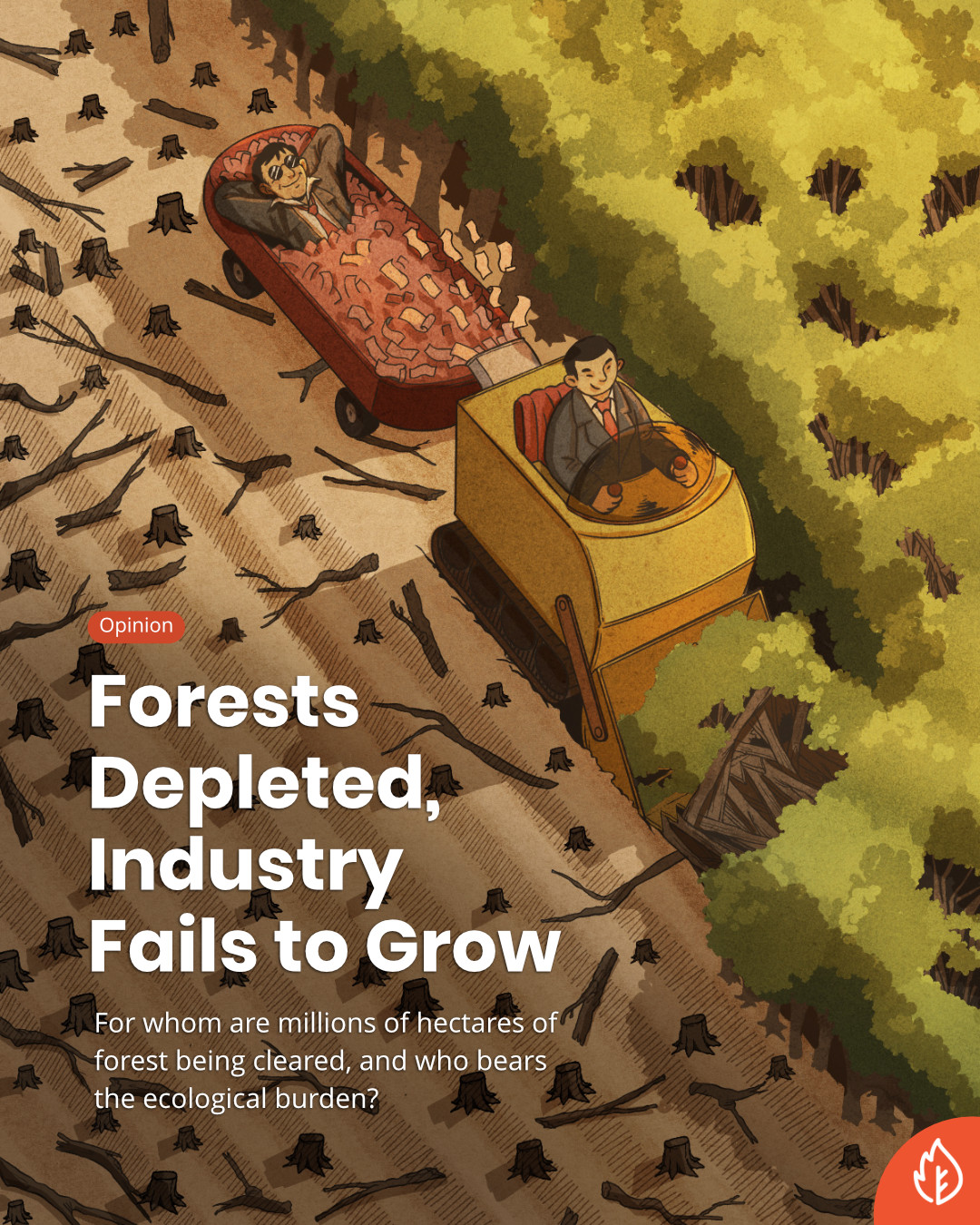
In its Second Nationally Determined Contribution (SNDC) 2025, the Indonesian government once again positions the Forestry and Other Land Use (FOLU) sector as the cornerstone of achieving its 2030 net sink target. The Ministry of Forestry aims for this sector to contribute as much as 60% of the country's total emissions reductions through measures such as the moratorium on forest conversion and peatland protection and restoration. However, this ambitious target comes with an explicit condition: its achievement must not come at the expense of national economic growth.
Historically, the FOLU sector has been Indonesia's largest source of greenhouse gas (GHG) emissions. Between 1990 and 2022, it accounted for an average of 51.5% of the country's total GHG emissions, or equivalent to approximately 650 million tonnes annually. This exceeded emissions from waste (12.5%), energy (11.4%), agriculture (10.9%), transport (7%), and manufacturing (6.6%). Assuming that every hectare of degraded forest releases approximately 100 tons of emissions, Indonesia has destroyed an average of 6.5 million hectares of forest each year over the past three decades.
This raises a fundamental question: What have Indonesians actually gained from releasing such enormous volumes of emissions year after year? Who has benefited from the clearing of millions of hectares of forests, and who has borne the ecological costs?
Development narratives often portray forest loss as an unavoidable cost of economic growth. Indeed, many industrialized countries in the temperate zone including the United States, Russia, Japan, and China, cleared vast portions of their forests during earlier stages of development. That deforestation formed part of a broader structural transformation toward industrial capitalism, through which natural resources were converted into productive capacity to support the expansion of manufacturing and technological development. In the process, these countries became responsible for nearly two-thirds of the cumulative greenhouse gas emissions currently stored in the atmosphere – equivalent to roughly 37% of the planet's remaining carbon budget.
Today, however, emissions in these countries are no longer driven primarily by the FOLU sector but instead originate predominantly from energy, transport, and manufacturing. Over the past decade, the global FOLU sector has accounted for only around 3% of annual greenhouse gas emissions, compared with 42% from electricity and heat production and 21.7% from transport. In other words, the deforestation and degradation that once occurred in industrialized countries ultimately laid the economic foundations that enabled their principal sources of emissions to shift toward other sectors.
Indonesia, unfortunately, has not followed the same historical trajectory. The average annual share of emissions generated by the FOLU sector between 1990 and 2022 (51.5%) of total national emissions has not translated into industrial takeoff. Forest conversion has been driven primarily by capital accumulation in extractive industries, such as plantations, mining, and timber concessions, with the resulting profits concentrated among large corporations and economic elites. Consequently, the surplus generated has not been reinvested domestically as the foundation for national industrial development.
A growing body of literature also suggests that GHG emissions are positively correlated with economic growth during the early stages of development. As production and consumption increase, emissions tend to rise accordingly. In Indonesia's case, however, the extensive ecological degradation and high emissions generated by the FOLU sector have not been accompanied by a corresponding increase in emissions from manufacturing, industry, or electricity and heat production, unlike the historical trajectory observed in developed countries.
The massive destruction of Indonesia's forests over the past several decades has not been matched by comparable gains for its people. Rather than generating inclusive economic growth, Indonesia has instead experienced economic stagnation, widening inequality, and the concentration of natural wealth in the hands of a small number of actors. Research by Bachriadi (2021) confirms this reality: for more than six decades, the Gini ratio of land ownership among farming households has consistently remained above 0.5–an indicator reflecting severe inequality and persistent poverty.
Even more concerning, the public continues to bear the ecological consequences of ongoing forest degradation. A series of ecological disasters including floods, droughts, land and forest fires, and declining soil fertility has become an increasingly common feature of everyday life. A study by Pantau Gambut (2025) found that land-use conversion, particularly the conversion of peatlands for extractive industries, has diminished the soil's natural water-retention capacity, increased the risk of seasonal flooding, and heightened the vulnerability of communities living in surrounding areas.
In this context, positioning the FOLU sector as the "backbone" of Indonesia's transition toward the 2030 net sink target, without addressing the underlying political-economic structures that perpetuate forest destruction, is inherently contradictory. Expecting a sector that has long been sacrificed for short-term capital accumulation to now serve as the country's climate savior, while leaving intact the extractive logic that drives its degradation, will only produce a policy paradox. We cannot expect ecosystem restoration, which ultimately risks becoming little more than a “gimmick” to succeed, while continuing to sustain the very system that enables ecological destruction.