Peatlands serve as a critical line of defense as the world struggles to contain rising global temperatures. They store around 30 percent of the world’s carbon. Yet conditions on the ground reveal a disheartening paradox.
Rather than being protected as a long-term ecological asset, peatlands continue to be drained and exploited, releasing massive carbon reserves into the atmosphere and accelerating the climate crisis. This degradation was formally raised during a public hearing of Commission IV of the House of Representatives on land-use conversion and its environmental impacts, held on Monday, 26 January 2026.
The damage is no longer a matter of academic projection, but a reality reflected in empirical data demonstrating this ecosystem has reached its saturation point. A study by Pantau Gambut “The Sinking Wetlands”, found that approximately six million hectares of peat hydrological units in Indonesia are now highly vulnerable to flooding during the rainy season. This vulnerability is not a natural occurrence, but a direct consequence of structural degradation caused by excessive canalization.
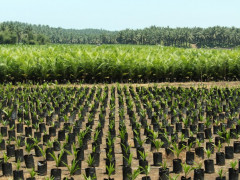
The construction of large scale canal networks for monoculture commodity production has forced water out of peat soils, causing them to dry, compact, and lose their natural function as water-retaining sponges. The total length of canalization across three major islands in Indonesia has now exceeded 281,000 kilometres, a staggering figure equivalent to 120 return trips along the Trans-Java Toll Road.
As peatlands lose moisture, they become highly flammable during the dry season and contribute to flooding during the rainy season. Data shows between 2015 and 2024, land fires burned more than three million hectares of peatland. The periodically occurring El Niño phenomenon consistently worsens this situation, driving sharp increases in fire incidence, with similar risks projected to recur in 2027.
Conversely, when rainfall arrives, previously desiccated areas are no longer capable of retaining water. As a result, hydrological flooding has become an annual occurrence, generating significant economic losses. In 2021 alone, floods in South Kalimantan inundated eleven districts, with estimated losses reaching IDR 1.34 trillion. This figure rose substantially during the floods in Sumatra in late 2025, with a study by Celios projecting losses of up to IDR 68.67 trillion and thousands of casualties.
This environmental tragedy is further compounded by the disorder of regulation and overlapping policies that appear to pave the way for permanent damage. One of the most critical points is the divergence in technical standards for peatland management, including conflicting groundwater level thresholds across ministerial regulations, which creates confusion in field implementation.
Regulatory revisions under the Omnibus Law on Job Creation have weakened protection standards, particularly through mechanisms that legitimize previously non-compliant concessions and allow peatland utilization for National Strategic Projects (NSP), often overlooking ecological sustainability. Policies promoting food and energy self-sufficiency, while nationally significant, continue to underplay peatland vulnerability in medium-term development planning.
This situation is rendered more complex by institutional fragmentation. the separation of the environment and forestry sectors, compounded by the dissolution of the Peatland and Mangrove Restoration Agency. Peatland management has become highly sectoral, constrained within particular administrative boundaries.
Authority distributed across multiple ministries often hampers coordination, particularly in law enforcement and data access. Vital data including server assets and concession information remains effectively locked within complex bureaucratic systems, limiting public accessibility.
The time has come for a paradigm shift in addressing peatland-related disasters. For too long, government and law enforcement efforts have largely focused on forest and land fire prevention. Yet flooding represents an equally important indicator of ecosystem degradation and must be recognized as a hydrological disaster driven by ecological decline, rather than attributed solely to extreme weather.
Mitigation efforts must shift toward preventive approaches, using environmental vulnerability indicators as the basis for administrative action, rather than responding only after fires erupt or floods have submerged settlements. Comprehensive and independent environmental and licensing audits are essential, not only for concession holders, but also for licensing authorities, to ensure accountability in land governance.
Elevating peatland protection into statutory law is a critical step to strengthen enforcement against competing sectoral regulations. Without institutional strengthening and cross-sectoral authority, restoration efforts will remain fragmented and ineffective.
The future of Indonesia’s peatland ecosystems, a pillar of global climate stability, must not be sacrificed for short-term economic interests. Every hectare of peatland lost represents a setback in the global effort to combat climate change.
Peatland protection is an investment in the safety of future generations, a commitment that must be realized before the next El Niño breathes fire upon the land, or the next rains weep or the next rains weep sorrow upon it.
This article was previously published in Katadata on 2 March 2026.