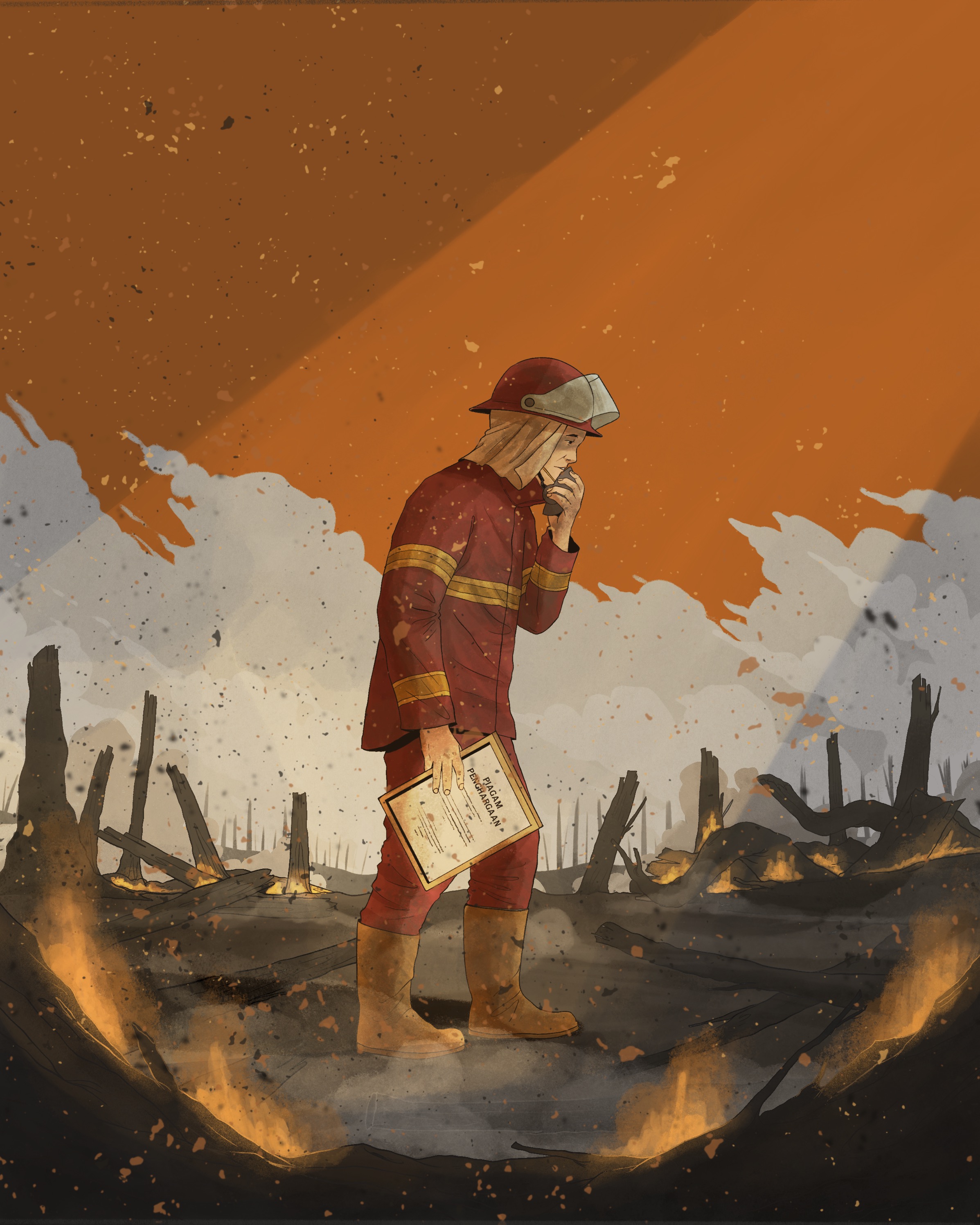
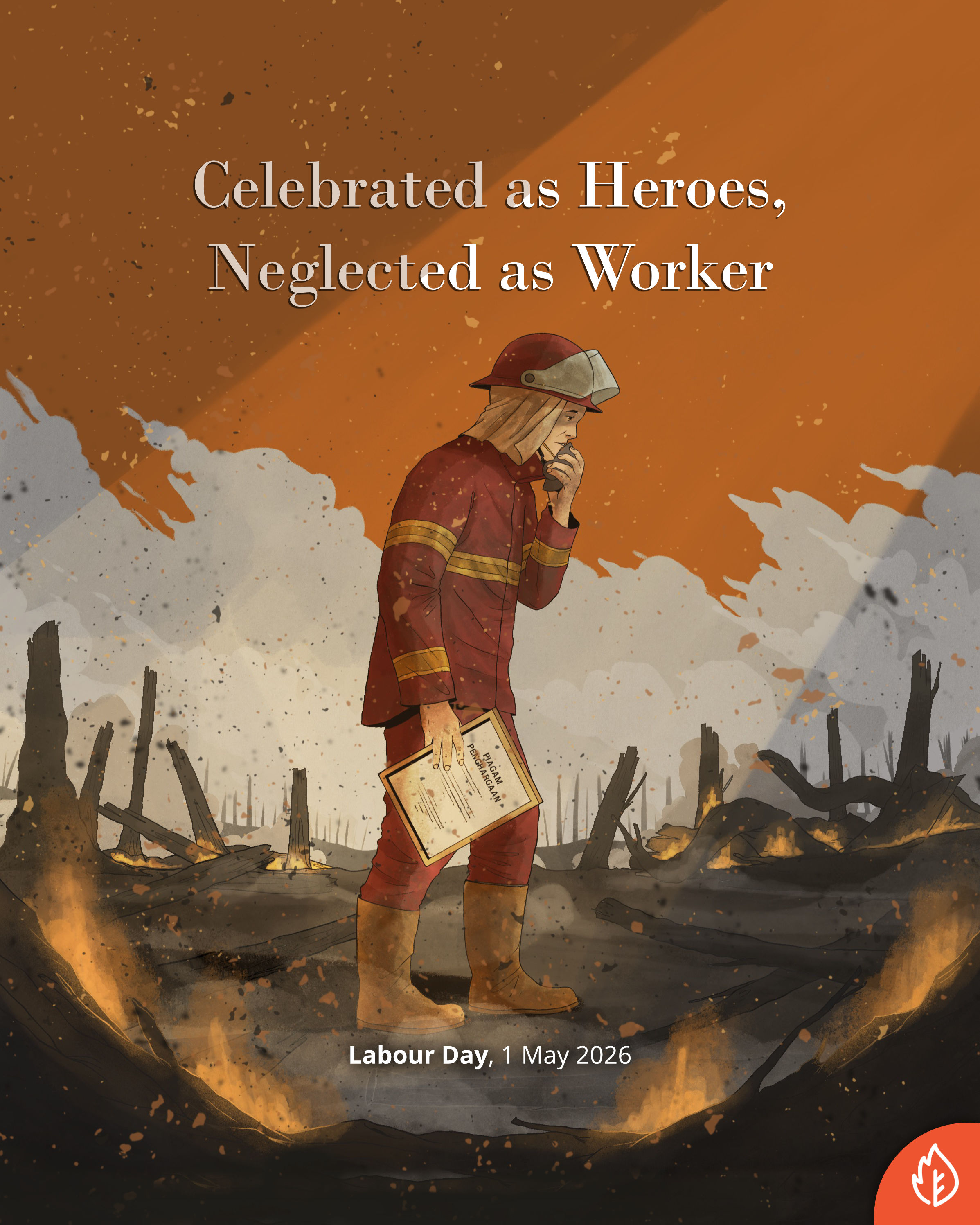
Every May 1st serves as a moment to reflect on how far the state has gone in honouring the rights of workers. Not only for industrial workers, but also for frontline environmental actors such as Manggala Agni.
The label “hero,” frequently attached to Manggala Agni, should not remain a form of symbolic appreciation. These are personnel who risk their lives amid forest and land fires. Yet this heroization carries the risk of concealing a more fundamental problem: the unmet guarantee of rights, adequate labour protection, and proper safety guarantees.
The work carried out by Manggala Agni is far from ordinary. They operate under exposure to toxic smoke, extreme temperatures, and highly unpredictable field conditions. These risks are not incidental they are an inherent part of the job. When protection measures fall short, what is at stake extends beyond individual safety to the sustainability of peatland ecosystem protection itself.
From a human rights perspective, high-risk occupations must be matched with commensurate protection and compensation. Yet the reality reveals a gap between symbolic recognition and structural protection.
The government has indeed provided formal recognition by incorporating this profession into the functional civil service position. Normatively, this step is significant. However, its implementation has not yet been fully realised.
A portion of Manggala Agni members remain on contract status. They perform the same duties and face risks comparable to civil servants, yet do not receive equivalent rights and protections. This disparity reflects a gap between formal recognition and practical justice.
Despite bearing substantial responsibility in controlling forest and land fires, Manggala Agni officers on the front lines receive a salary of approximately 5.5 to 7 million rupiah, figures that fall short of reflecting the level of risk and workload they bear.
This disparity becomes more evident when compared to salaries of officials within the Ministry of Forestry, which may reach up to IDR 33 million per month, revealing a wide gulf in recognition between risk-intensive fieldwork and low-risk bureaucratic roles.
The heroization of professions continues to function as a comforting narrative. Individual sacrifice is elevated, while systemic failures in safeguarding workers’ rights remain overlooked. In such conditions, occupational risk is gradually normalized, rather than treated as a responsibility to be minimized by the state.
In reality, every worker is entitled to safe working conditions and adequate protection, without exception.
This pattern is not unique to Manggala Agni. Across various sectors, workers frequently receive symbolic recognition without corresponding structural protection. They also face psychosocial risks, including stress, fatigue, and prolonged occupational pressure.
A critique of professional heroization does not mean rejecting recognition of dedication and hard work. On the contrary, this critique aims to redirect attention toward the responsibility of the state and employers to ensure the full realisation of workers' rights.
To move beyond this trap, there are at least three urgent priorities must be addressed. First, ensuring employment status certainty for contract-based personnel. Second, establishing consistent occupational safety and health (OSH) standards. Third, developing compensation systems aligned with the level of risk involved.
Respect for workers cannot rely on symbolism alone. It must be reflected in tangible protections that secure their safety, welfare, and future stability.
Ending heroization does not mean eliminating recognition, it corrects a perspective that frames sacrifice as something to be accepted without question. Workers do not require heroic labels to perform their duties. They require fair systems and adequate protection.
Ultimately, genuine recognition for Manggala Agni lies not in titles, but in policies and working systems that provide real protection. Labour Day should serve as a moment to transform symbolic appreciation into the fulfilment of fair and human rights, for that is where the dignity of workers is genuinely upheld.