By Iola Abas
from Pantau Gambut
What does independence mean if we are still trapped by our own smoke and the forest and land fires that continue to be deliberately set?
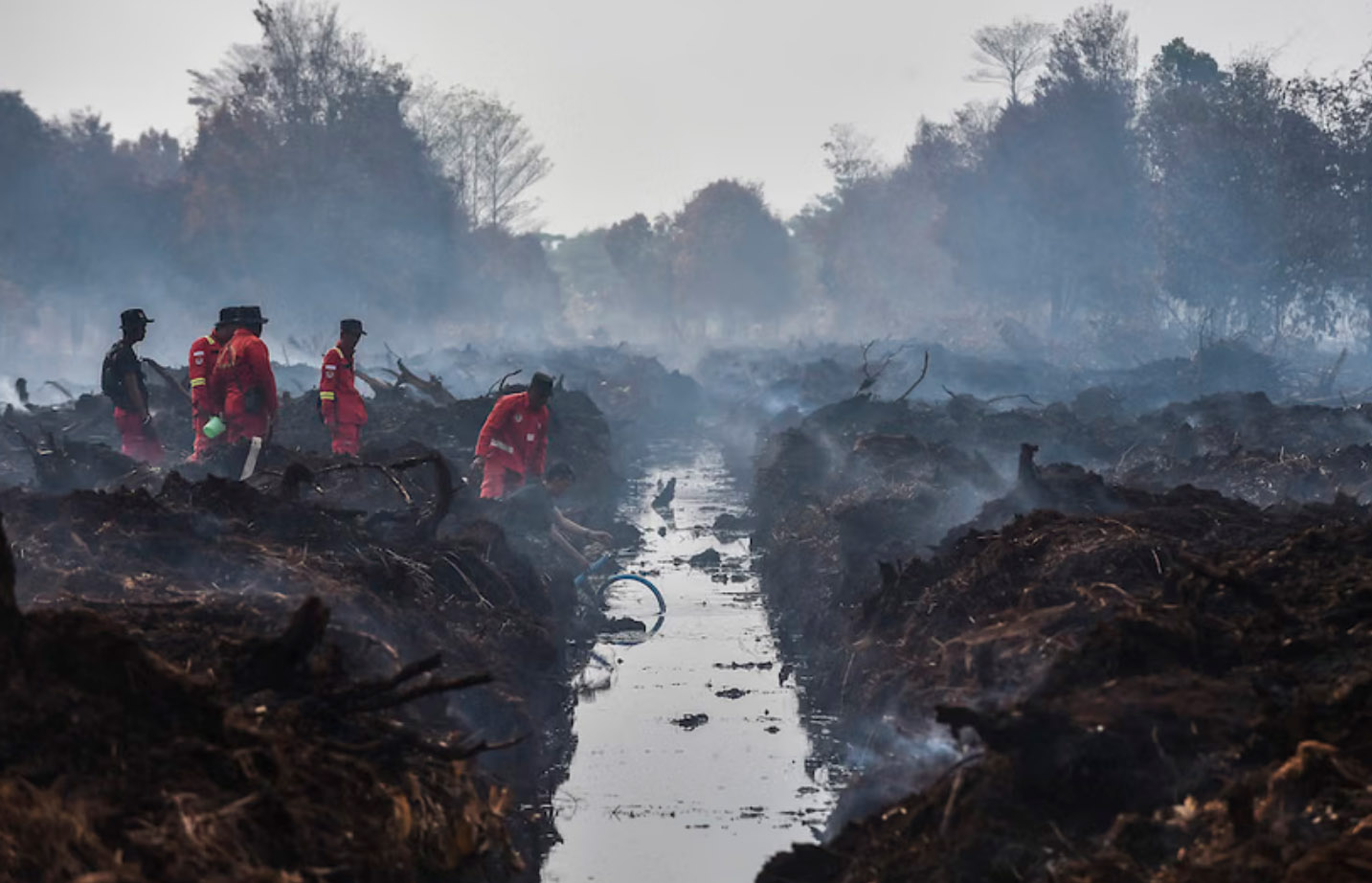
Land and forest fire in Gambut Jaya Village, Muaro Jambi, Jambi Province, 30 July 2025 Antara/Wahdi Septiawan

It is remarkably difficult for Indonesians to free themselves from the threat of these fires. In just one month, Pantau Gambut detected 11,287 hotspots, a figure that increased more than fivefold from June to July 2025, across 303 Peat Hydrological Units (PHU). The combination of this scale and timing is unusual, especially considering that the government often blames extreme weather as the primary cause of forest and land fires, particularly during the peak period of June–July.

This year’s dry season was expected to be milder compared to 2023. The Meteorology, Climatology, and Geophysics Agency (BMKG) reported that this year’s dry season was accompanied by heavy to very heavy rainfall, unlike in 2023 when Indonesia was hit by a severe El Niño. Yet, the number of hotspots in July this year was four times higher than in July 2023.

This comparison demonstrates that the forest and land fires problem is far more complex than merely a natural factor. It is a crisis rooted in the long-standing and unsystematic management of peatland ecosystem degradation. Indonesia may have been free from foreign colonization for 80 years, but the legacy of environmental threats has not entirely disappeared due to mismanaged ecosystems.

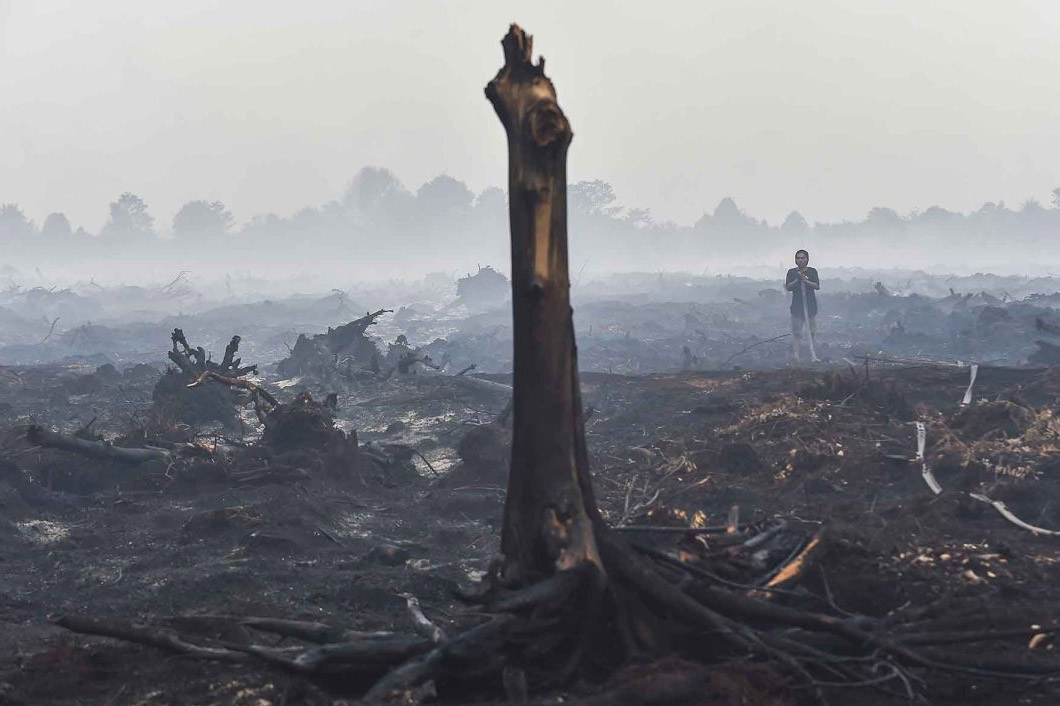
Land and forest fire in Gambut Jaya Village, Muaro Jambi, Jambi Province, 30 July 2025 Antara/Wahdi Septiawan

Reality on the Ground

This crisis is not a singular phenomenon but an accumulation of problems at the local level. Each region faces different challenges, yet they all stem from weak prevention measures and failed law enforcement. Rather than investing in preventive actions to stop forest and land fires, the government chooses to act only after the smoke has thickened.

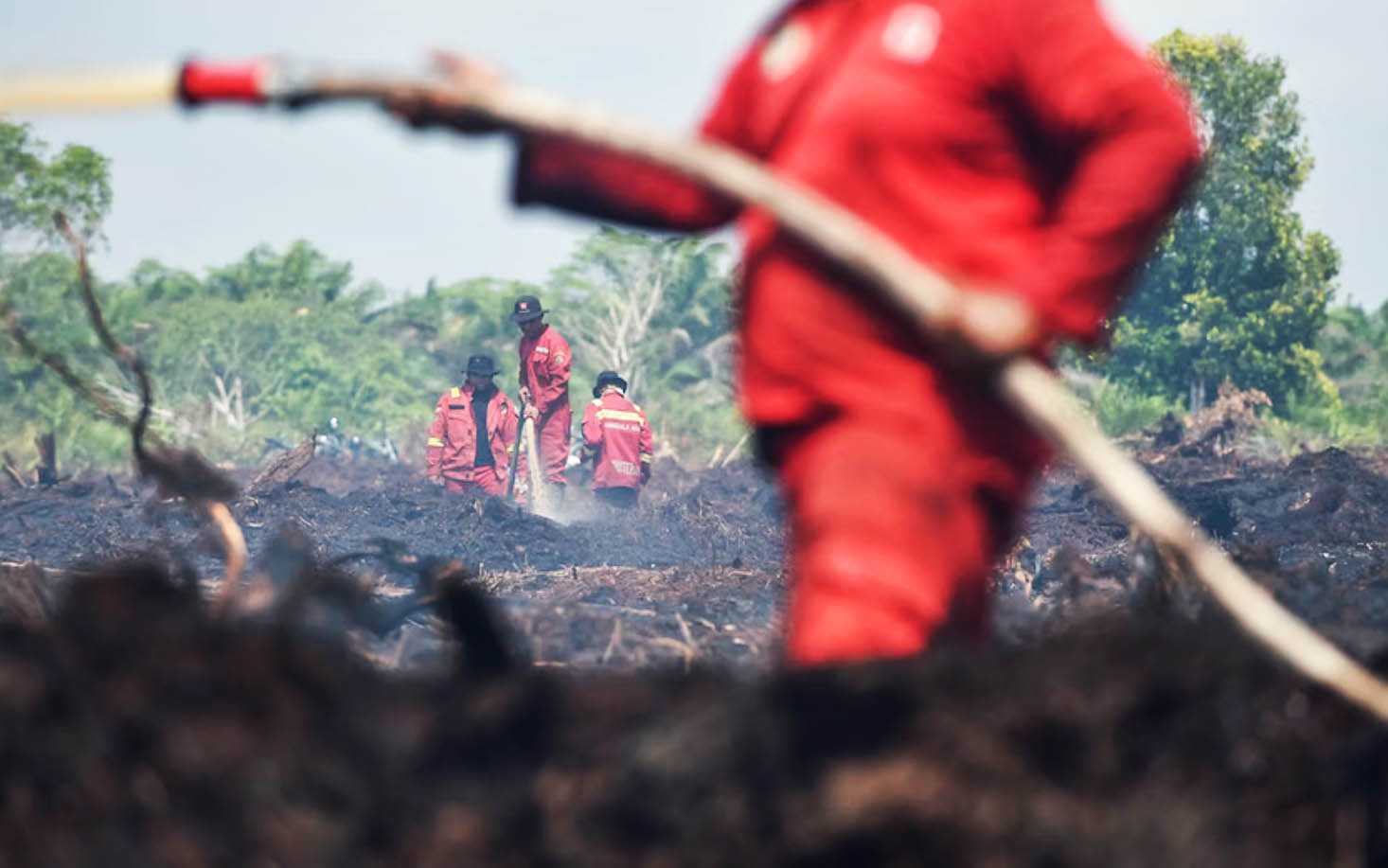
In Aceh, Masyarakat Peduli Api (MPA), a volunteer group meant to serve as the frontline in fire control, has been left to operate without clear guidance. As a result, they struggle to contain the spread of fires.

In Riau, many much-needed peatland restoration facilities remain idle. This is particularly concerning, as the province is frequently highlighted for recurring forest and land fires each year.

Government projects intended to restore peatlands to a wet and healthy condition have, instead, been left abandoned. The consequences are widespread, including increased conflicts between humans and wildlife, such as elephants and tigers. These animals are forced out of the forest and into residential areas due to habitat degradation.

In Central Kalimantan, even though Manggala Agni has conducted monitoring, there has been no serious follow-up in areas experiencing repeated fires. This weak response signals that perpetrators can act again without facing consequences.

A lack of deterrent effect is also evident in West Kalimantan. Companies that have previously been sealed off or prosecuted for forest and land fires related violations have returned to committing similar offenses.

As peatland degradation worsens, the problem extends beyond dry-season fires to include flooding in the rainy season. Damaged peatlands are no longer able to absorb water, as seen in Jambi and South Kalimantan, where the threat of floods alternates with recurring forest and land fires.
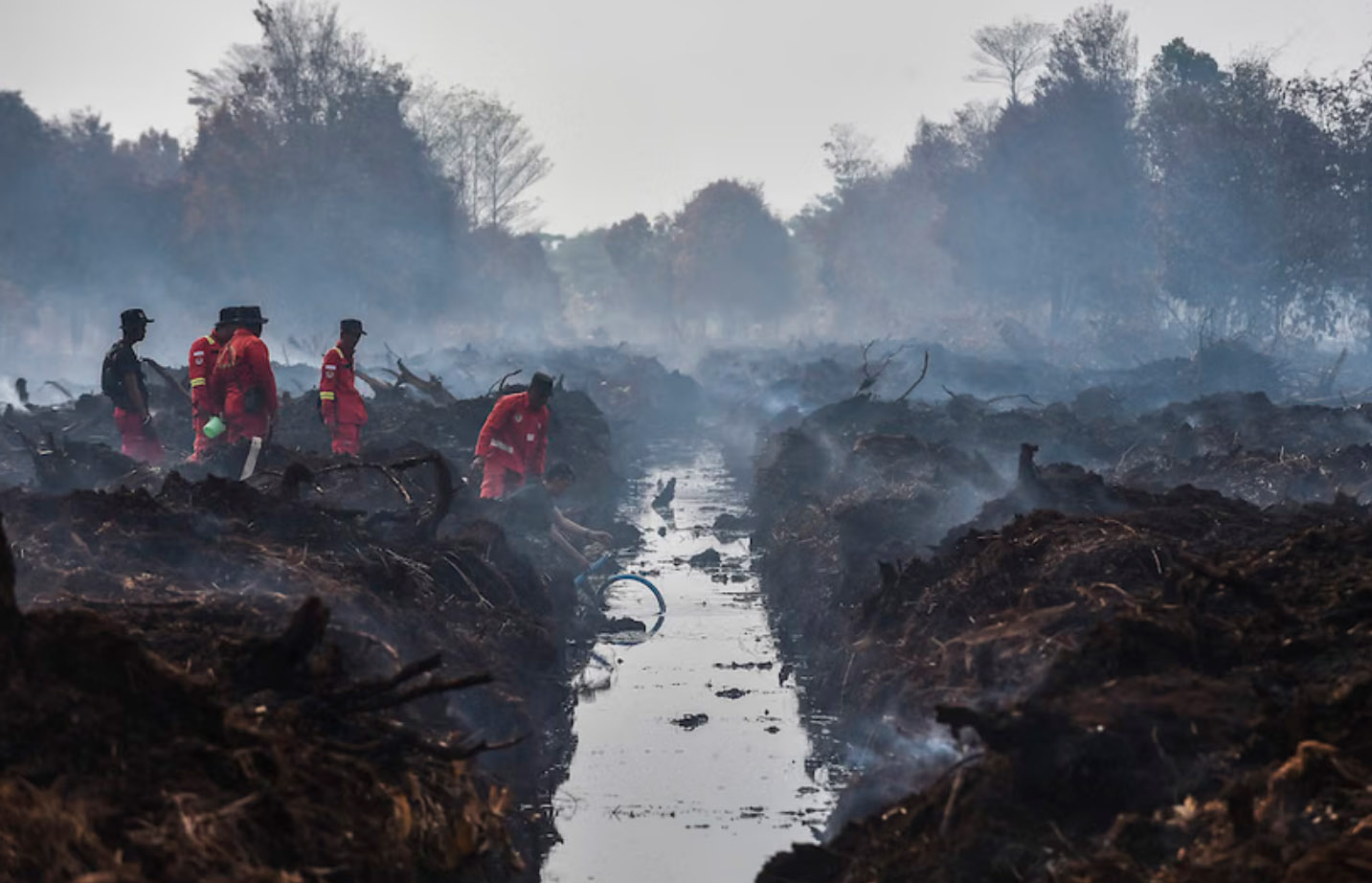
Land and forest fire in Gambut Jaya Village, Muaro Jambi, Jambi Province, 30 July 2025 Antara/Wahdi Septiawan

Root Causes Go Beyond Weather

The facts above confirm that the forest and land fires crisis is not solely the result of weather conditions. There is a legal gap regarding peatlands. Although Indonesia has Government Regulation (PP) No. 57 of 2016 in conjunction with PP No. 71 of 2014 on the Protection and Management of Peatland Ecosystems, these regulations remain vulnerable to being overridden by higher-ranking laws, such as the Omnibus Law on Job Creation.

This vulnerability is evident in the continued clearing of peatlands in protected zones. In Muaro Jambi Regency, Pantau Gambut detected 287 hot spots in seven-meter-deep protected peatlands within the concession of PT Sumbertama Nusa Pertiwi.

The orderly pattern of the fires strongly suggests deliberate land clearing. These findings indicate that protected peatland zones with vital ecological functions are still being set ablaze.

Ultimately, the meaning of independence for this nation comes into question. What does it mean to be free if we remain imprisoned by our own smoke? Independence is not only about flying flags; it is also about ensuring clean air, pure water, and fertile land for all citizens.

However, as long as policies and law enforcement remain merely formalities and short-term gains are prioritized, the threat of forest and land fires will continue to be an unresolved issue, even after eight decades of independence.

This article was previously published in Tempo’s Kolom Hijau on 13 September 2025.

The Green Column is a collaboration between Tempo and several civil society organizations in the environmental sector, published weekly.

Support Us

Share this information with your family and friends.