However, this claim appears to stand in stark contrast to the growing threat of forest and land fires, and their impacts on people’s rights to clean air, a healthy environment, and a safe living space.
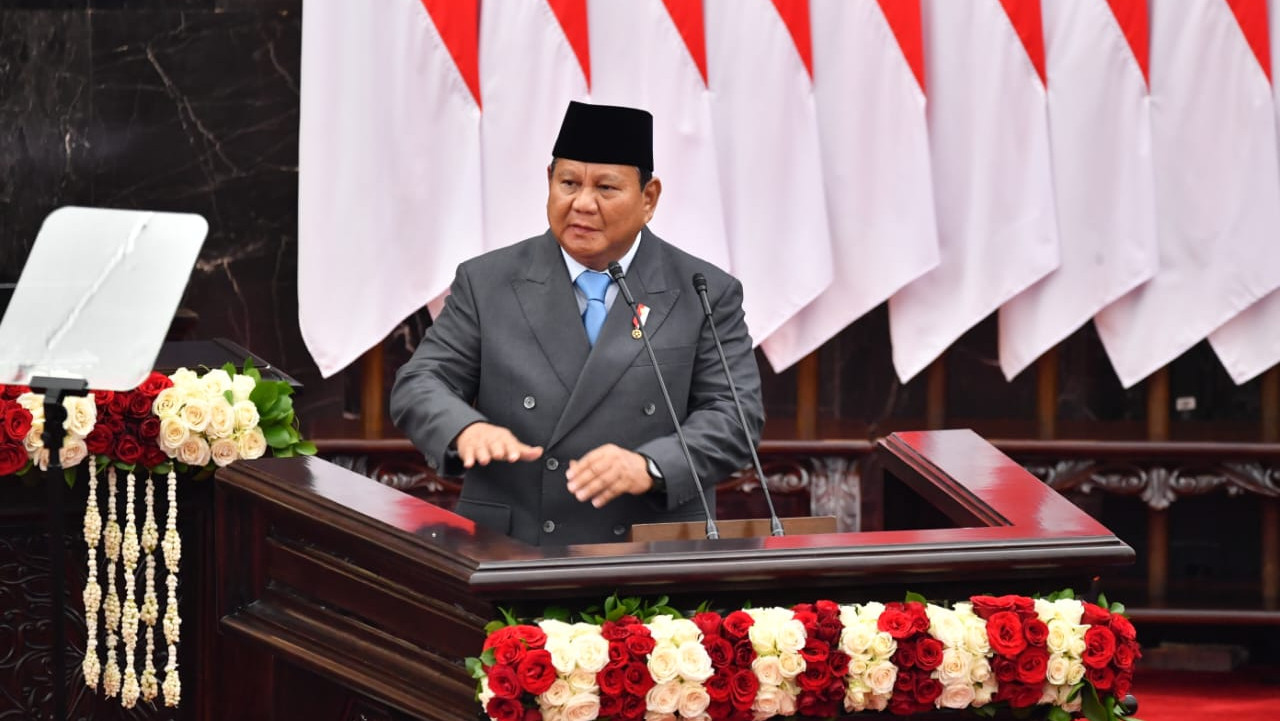
The President’s State of the Nation Address continues to position growth, investment, downstreaming, and commodities as the primary measures of development success. At the same time, the ecological risks arising from development policies, including wetlands degradation, agrarian conflicts, and forest and land fires, receive little to no attention.
Iola Abas, Director of Pantau Gambut, emphasized that development cannot be deemed successful when its ecological costs are borne by communities. “Development cannot be claimed as successful if it comes at the cost of ecosystem destruction and the erosion of people’s sovereignty. When ecological risks are ignored, the benefits become concentrated in the hands of a few, while communities bear the consequences,” said Iola.
One example can be seen in the conversion of wetlands in South Papua for the National Strategic Project (NSP) on food, water, and energy. An approach characterized by limited meaningful participation, coupled with increasing military involvement, risks further marginalizing Indigenous communities and accelerating ecological degradation.
Pantau Gambut’s analysis recorded an increase in hotspots in South Papua from 757 in June to 4,220 in July 2026. This surge should serve as a serious warning to evaluate large-scale development projects in areas vulnerable to fires.
Forests also received very limited attention in the President’s speech and were primarily framed in terms of their economic carbon value. Palm oil, meanwhile, was discussed as a source of economic added value without acknowledging the risks of land conversion, hydrological degradation, and spatial conflicts accompanying its expansion.
Pantau Gambut presents three critical points regarding the President’s State of the Nation Address:
- Food self-sufficiency claims overlook the threat of forest and land fires and local food diversity
The pursuit of food self-sufficiency cannot be separated from the threat of forest and land fires and the degradation of ecosystems that support food production. Pantau Gambut recorded 15,067 hotspots throughout July 2026, ahead of the peak period for forest and land fire risks in August to September.
El Niño does exacerbate dry conditions. However, the climate phenomenon should not be treated as the sole explanation, obscuring issues of wetlands governance, land clearing, and weak fire prevention. A food self-sufficiency orientation based on mass commodity production also risks sacrificing local food diversity, particularly in areas affected by National Strategic Projects (NSP). Food policies should protect local food systems rather than replace them with large-scale monoculture production.
- Carbon trading must not obscure agrarian conflicts
The carbon trading agenda risks reducing spatial conflicts and ecological injustices to mere calculations of emissions and economic transactions. Peatland protection must not stop at the number of tonnes of carbon that can be traded, but must also address unequal land control and protect communities’ rights to their living spaces.
Pantau Gambut’s research, A Decade of Peatland Restoration in Indonesia, found 97 percent of peatland burned between 2015-2019 never returned to forest. Only 3 percent recovered into forest, while 41 percent became shrubland and 54 percent were converted into monoculture plantations, particularly oil palm. These findings demonstrate carbon trading will not resolve the peatland crisis if monoculture plantation expansion, agrarian inequality, and weak law enforcement continue to be left unaddressed.
- Law enforcement must lead to ecological restoration
The enforcement action against illegal mining presented as an achievement stands in contradiction to policies involving administrative settlement or the “legalization” of illegal oil palm plantations within forest areas. Pantau Gambut recorded of approximately 3.3 million hectares of oil palm plantations included in the agenda, 407,267 hectares are located within Peat Hydrological Units (PHU). Within this PHU areas, 84 percent is located in the protected function.
Law enforcement must not stop at asset seizure, administrative settlement, or increased state revenue. Law enforcement must ensure the cessation of environmental destruction, ecosystem restoration, accountability for perpetrators, and the fulfillment of the rights of affected communities.
Pantau Gambut urges the government to evaluate development projects in wetlands, halt the legalization of illegal plantations within protected peatland areas, and ensure that carbon trading and law enforcement agendas prioritize ecological restoration and agrarian justice.
“The State of the Nation Address should not merely serve as a platform to showcase achievement figures. It should also be a moment to acknowledge, evaluate, and take responsibility for the risks created by development policies,” Iola concluded.