| Opinions
The Destruction of Papua's Peatlands Through the Mystification of Development
By Putra Saptian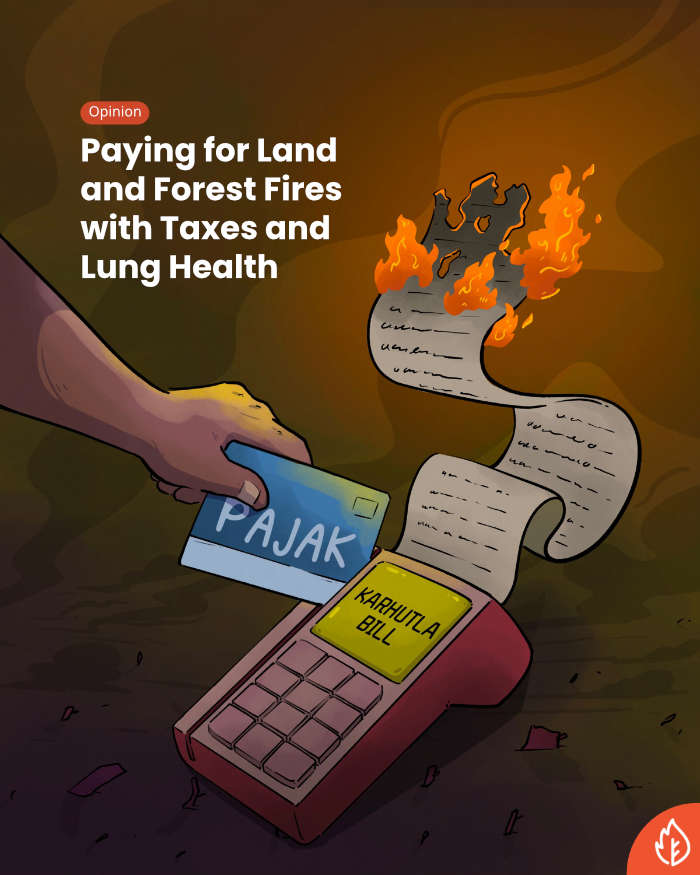
This is no longer an early warning. By mid-August, smoke had blanketed Banjarbaru. In one location, visibility was reduced to just 5-0 meters. Motorists pulled over, yet the smoke continued to enter their lungs. In Pontianak, schools shifted to online learning.
In North Kayong, 934 cases of acute respiratory infections (ARI) had been recorded by early August. East Kotawaringin even put oxygen rooms on standby. August in Kalimantan is not just about competitions and parades. Space to breathe must also be prepared.
In Ketapang, 26-year-old Taufik Hidayat died after reportedly fainting while traveling along a road surrounded by smoke and flames. The sequence of events is still under investigation. One thing is certain, Taufik never made it home.
Forest and land fires are not merely numbers. But hotspot data shows the scale of the problem. In the first 20 days of August, Pantau Gambut’s analysis recorded 66,683 hotspots across peatland ecosystems, this is more than quadruple July’s total and already exceeding the 45,428 hotspots recorded between January-July. Nearly 80 percent were found in West Kalimantan and Central Kalimantan; South Papua recorded 5,335 hotspots and South Sumatra 1,694. A total of 31,198 hotspots, or nearly half of August’s total, were located within the indicative protected function of peatland ecosystems. Hotspots do not always mean fires. Yet schools have already closed and oxygen rooms have been put on standby. What are we waiting for?
Numbers on this scale should shift the conversation toward prevention. Instead, the government keeps pointing to El Niño. Months earlier, the Meteorology, Climatology, and Geophysical Agency (Badan Meteorologi, Klimatologi, dan Geofisika/BMKG) had already warned the dry season would arrive early. More recently, a strong El Niño was confirmed, with the highest risk of forest and land fires expected in August-September, particularly across Sumatra and Kalimantan. Its influence is real. The problem is that El Niño is invoked so repeatedly that it starts to sound like a convenient answer to everything.
El Niño is indeed the most convenient suspect. It has no office address, has never signed a permit, and cannot be ordered to restore peatlands. Before it arrives, the stage has already been “prepared”: canals drain the water, forests are cleared, and permits are issued. Unfortunately, whoever made the decisions, El Niño still gets the blame.
Pantau Gambut’s groundwater table data shows just how dry the stage has become. By mid-August, peatland groundwater levels in 20 districts and municipalities across Central Kalimantan, South Kalimantan, and South Sumatra had already reached critical levels. The early warning threshold is 40 centimetres below the ground surface; in several areas of South Kalimantan, groundwater levels had dropped as deep as 71 centimetres. When the water is drained, peat becomes fuel. Fire spreads underground, while smoke travels wherever the wind takes it.
Peatland drainage is not the only problem. Natural forests continue to shrink as well. Auriga Nusantara recorded 433,751 hectares of deforestation in 2025, a 66 percent increase. Two of the four provinces with the largest areas of deforestation, whereas Central Kalimantan and West Kalimantan also ranked among the top two provinces for the number of peatland hotspots recorded in August this year.
The overlap is too striking to dismiss as coincidence. The government only needs to open the maps down to the site level and show whether forest loss, drainage canals, and hotspots are occurring in the same locations. Landscapes do not change on their own. Behind every change are decisions about what the land is used for and who is allowed to use it.
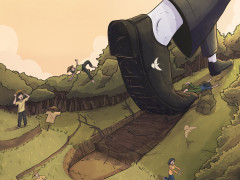
Those decisions often come wrapped in a powerful word: development. Auriga recorded 78,123 hectares of deforestation within forest areas designated for food, energy, and water, National Strategic Programs (NSP) have also contributed to the surge. Call it development, and the forest is expected to understand why it must disappear. Nature’s resilience is sacrificed in the name of growth. When disaster strikes, the weather is made to take the stand and explain.
By mid-August, Pantau Gambut’s analysis showed that nine provinces and 41 districts and municipalities had declared heightened alert or emergency response status for forest and land fires and drought. Yet while the “heightened alert” status was in effect, peatland groundwater levels continued to fall and hotspots surged. Once the fires spread, the deployment of personnel, helicopters, and weather modification operations received the most attention. The government is quick to explain how the fires are being put out. But when asked who failed to prevent them and who should be responsible for restoration, the answers keep changing.
On August 21, the Minister of Environment stated there had been no reports of forest and land fires in concessions. That same day, his ministry announced that it had sealed burned concession areas covering approximately 454 hectares. The following day, the minister said 335 companies were suspected of having fire hotspots and fires within their concessions, covering nearly 85,000 hectares. Within 24 hours, the account had shifted from “no reports” to hundreds of companies being identified as having indications of fires.
One of the concessions now under seal also burned in 2023. Between those fires and the flames that returned this year came administrative sanctions and a civil lawsuit. What remains unclear is what happened afterward. Was the land actually restored? Who paid for it? Canal blocks can be built and reports can be closed, but when the fire returns, it reopens all of those questions. The law should not wait for smoke before showing its teeth.
The seriousness of disaster prevention can be measured by the budget. National Disaster Management Agency’s (Badan Nasional Penanggulangan Bencana/BNPB) allocation for 2026 is only around IDR 491 billion, down from IDR 2.01 trillion in the 2025 state budget. The Head of BNPB said the prevention and mitigation funding over the past five years had amounted to only IDR 17-19 billion per year.
The Minister of Finance has stated that BNPB can request additional funding from emergency reserves. Such funds are important when a crisis becomes urgent, but they are no substitute for prevention budgets. The logic is puzzling: mitigation gets pocket change, while the cost of chasing fires by helicopter is dealt with later. A disaster-prone country only starts rummaging through the corners of its wallet when it is already under pressure.
Amid complaints about the limited mitigation budget, the state never seems to run out of imagination when it comes to ceremonies. On August 17, a giant image of the president was taken skydiving over the skies above the Monumen Nasional (Monas). The country is free to celebrate its independence. What feels bitter is the contrast: ceremonies are designed to reach the skies, while preparedness is repeatedly asked to make do with limited resources.
The theme “A Sovereign, Just, and Prosperous Indonesia” sounds grand from the podium. In disaster-prone areas, its measure is simple: people can breathe clean air, do not bear the damage from activities whose benefits are enjoyed by others, and do not lose their livelihoods because the root causes of disasters are left unaddressed.
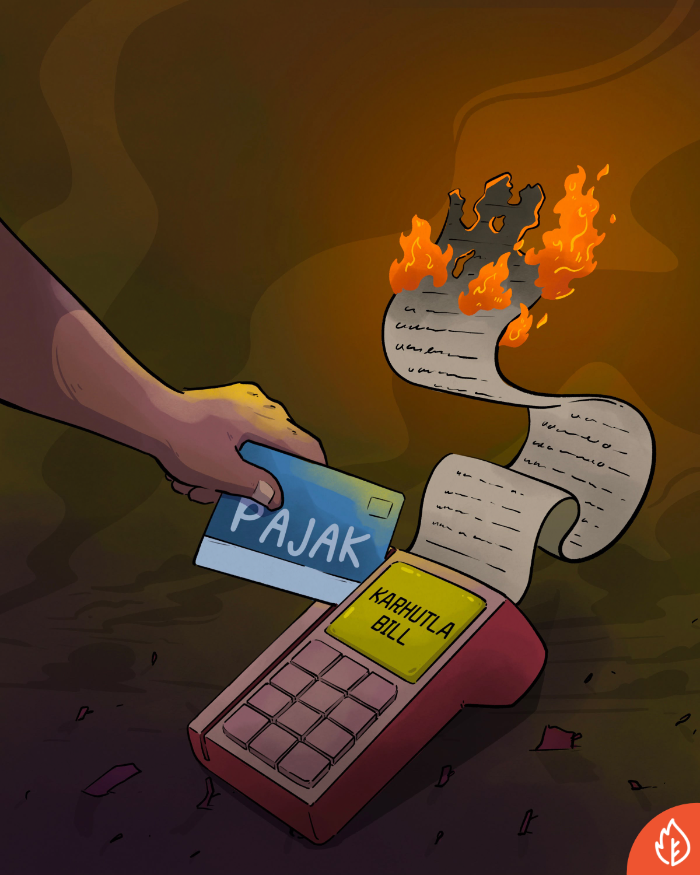
Public money does not belong to government officials. It comes, among other sources, from the taxes paid by citizens who also have to buy masks, pay medical bills, lose school and work days, or watch their livelihoods be damaged. When forest and land fires occur, they end up paying twice: with their taxes and their lungs.
What makes me angry is that none of this is new. We know which areas are vulnerable, when the seasons come, where fires have occurred before, and even who is operating on the surrounding areas. What is missing is not data or meetings, but the political will to review permits and confront powerful economic interests. If that continues to be avoided, who exactly is being protected here?
El Niño will pass. The rain will come, the smoke will thin, and the news cycle will move on. If peatlands continue to be drained, forests continue to be cleared, and prevention remains the first place to cut costs, this story will play out again. The numbers may change. The slogans may be new. The lungs paying the price will still belong to the same people.
This is the original version of an article previously published in Tempo on August 29, 2026.