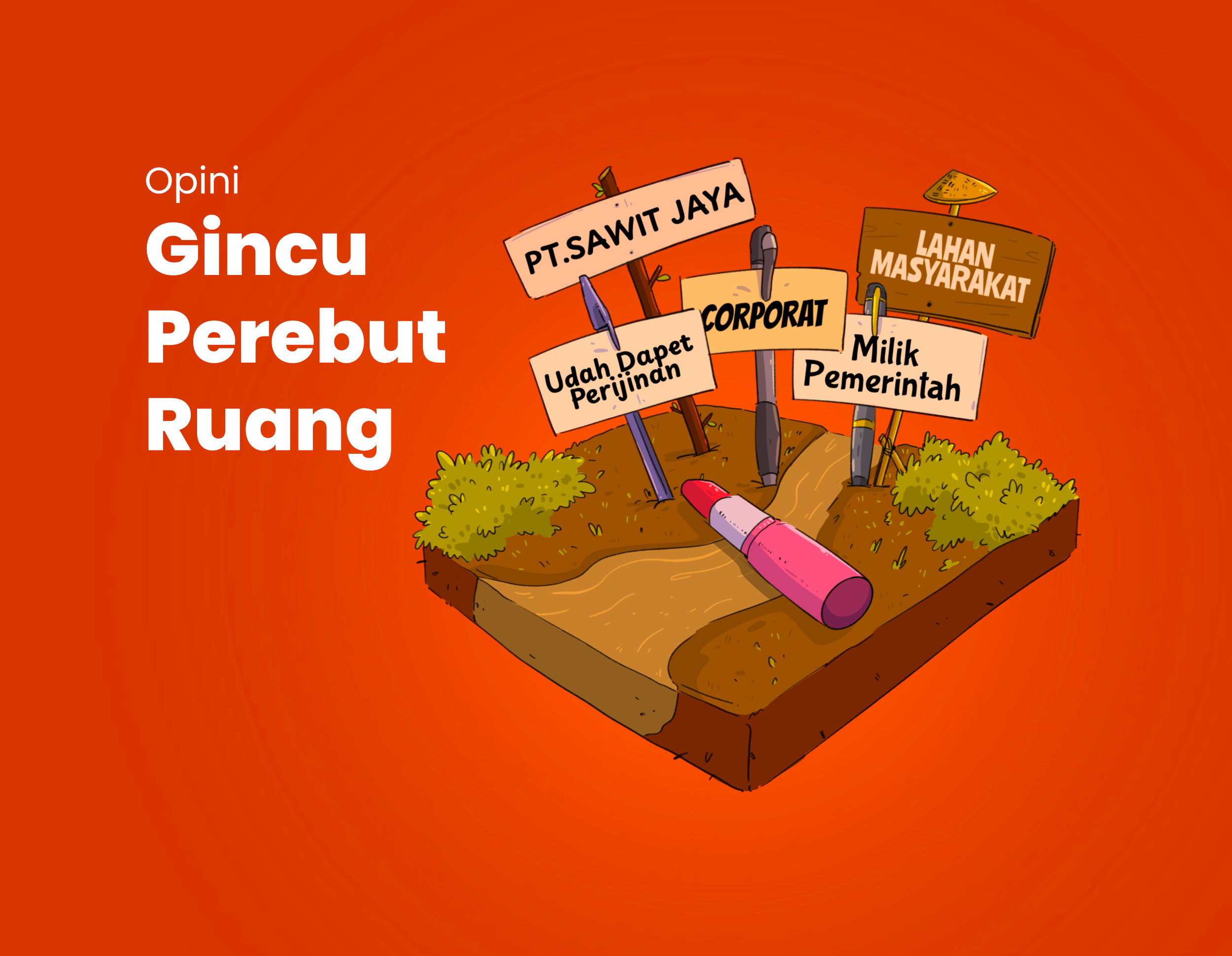
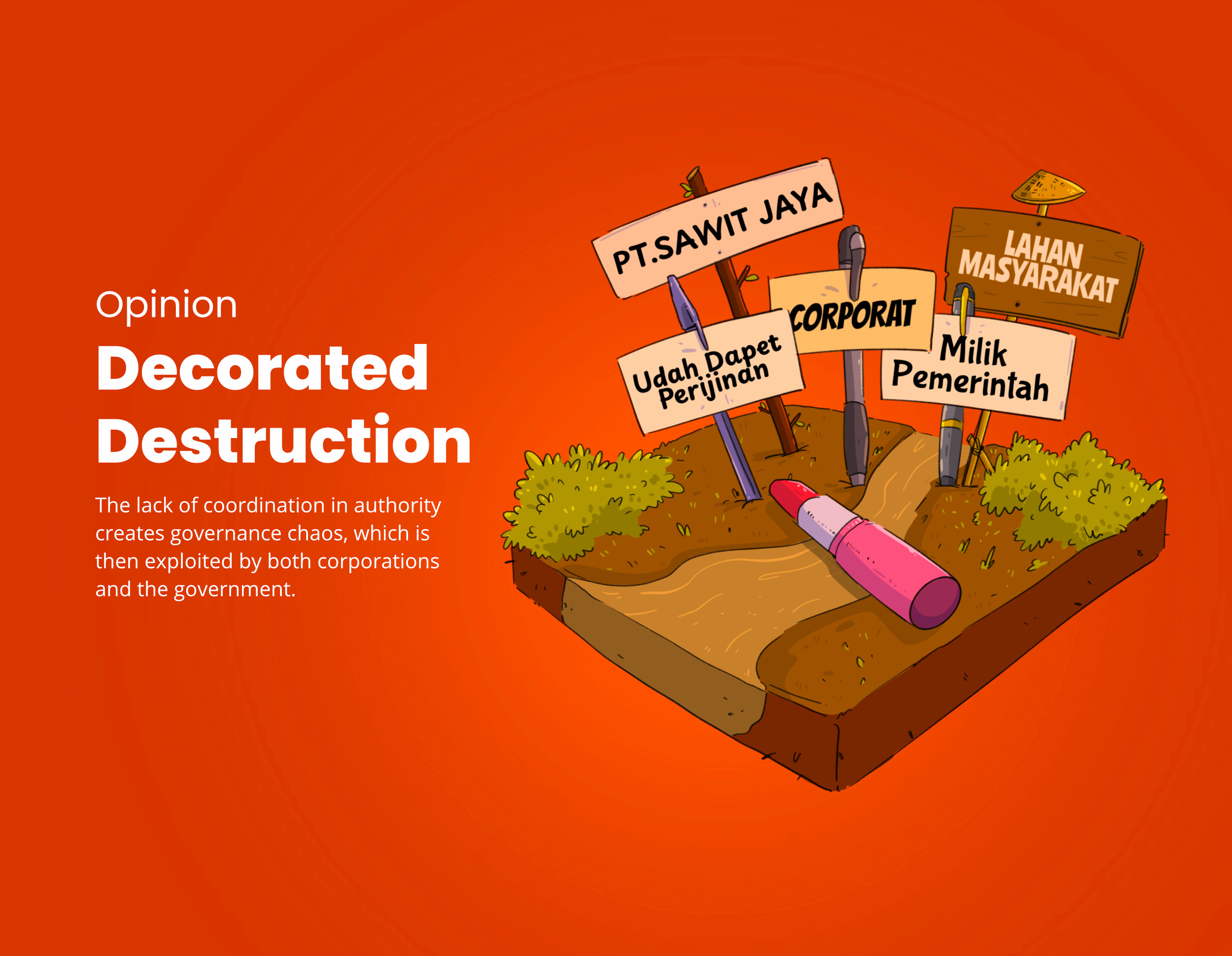
Instead of serving as a momentum for restoration, this World Wetlands Day commemoration serves as a poignant reminder that agrarian conflicts and territorial overlaps are almost always rooted in licensing processes that are blind to spatial realities.
In many instances, business permits are issued prematurely, while the clarity of spatial status—whether the land sits within a forest zone, community-managed areas, ancestral lands, or disputed territories—is ignored. At this juncture, Corporate Social Responsibility (CSR) emerges. However, it does not appear as a responsibility born of legal compliance and social justice, but rather as a patchwork response and a tool for social control over inherently flawed permits.
This issue is exacerbated by the fragmentation of authority among state agencies. Technical ministries, such as the Ministry of Agriculture, possess the authority to issue business permits in the plantation sector as administrative legitimacy for economic activities. Yet, this authority does not encompass the verification of land ownership or the social relations between farmers and capital owners. Consequently, business permits can be issued even when the designated land overlaps with forest zones or areas managed by communities for decades.
CSR is then utilized by companies as an instrument to create a "social license to operate" or to gain public acceptance. In reality, the emerging conflicts are not merely a matter of company-community relations. They stem from state decisions and licensing governance that neglect spatial justice and community rights.
The problem does not end there. Regarding land administration, the Ministry of Agrarian Affairs and Spatial Planning/National Land Agency (ATR/BPN) holds authority over "Other Use Areas" (APL) or non-forest zones, ranging from land determination and registration to certification. However, this authority often functions in isolation, out of sync with sectoral licensing processes.
Many territories are socially possessed and managed by communities but have yet to receive legal agrarian recognition. When companies implement CSR in such areas, the programs potentially strengthen the company's unilateral claims while weakening the position of communities whose rights remain unrecognized by the state.
In the forestry sector, this lack of synchronization is even more complex. The Ministry of Forestry has the mandate to determine forest zones and their designations. In practice, however, the designation of forest zones is often not the primary reference for issuing non-forestry sector permits. It is not uncommon for territories still classified as forest zones—or those that have not undergone a forest release process—to be burdened with business permits. Under these conditions, CSR is conducted on land that is not yet legally authorized for management under forestry law, causing social responsibility programs to stand on a fragile legal foundation.
This misalignment of authority creates a governance vacuum that companies then exploit. CSR becomes a social legitimization instrument to cover structural issues: overlapping permits, ambiguous land status, and the disregard for community rights. Instead of addressing the root of the conflict, CSR functions as a tool for social control—providing aid, facilities, or economic programs without touching the underlying injustice of spatial control.
In this situation, the state indirectly shifts the burden of structural conflict onto corporate CSR schemes. When overlapping authorities and permits are not rectified, CSR is used as a substitute for conflict resolution. Companies appear as socially conscious actors, while the government fails to perform its primary function of ensuring spatial justice, legal certainty, and the protection of citizens' rights. Consequently, conflicts recur, and CSR transforms from a social responsibility into a tool for normalizing structural inequality.
Ultimately, preserving wetlands is not about polishing an image through social assistance. It is about restoring the government's role in ensuring that every inch of the nation's land is managed with legal certainty and full respect for the rights of the people.